
ILSS Tips
Raising True Cost Funding: How Nonprofits Can Get The True Cost Of Impact Funded
Ritu Jain and Ravi Bagaria
Why does a program appear fully funded on paper, yet leave the organisation financially stretched?
Many nonprofit leaders know this paradox. A donor may fund workshops, field travel, community events, materials, or direct beneficiary support. Yet the same program also needs finance, compliance, monitoring and evaluation, leadership time, technology, administration, fundraising, organisational development, contingency, and reserves. When these costs are not funded, they do not disappear. They are absorbed through stretched teams, weak systems, delayed compliance, depleted unrestricted funds, or reduced program quality.
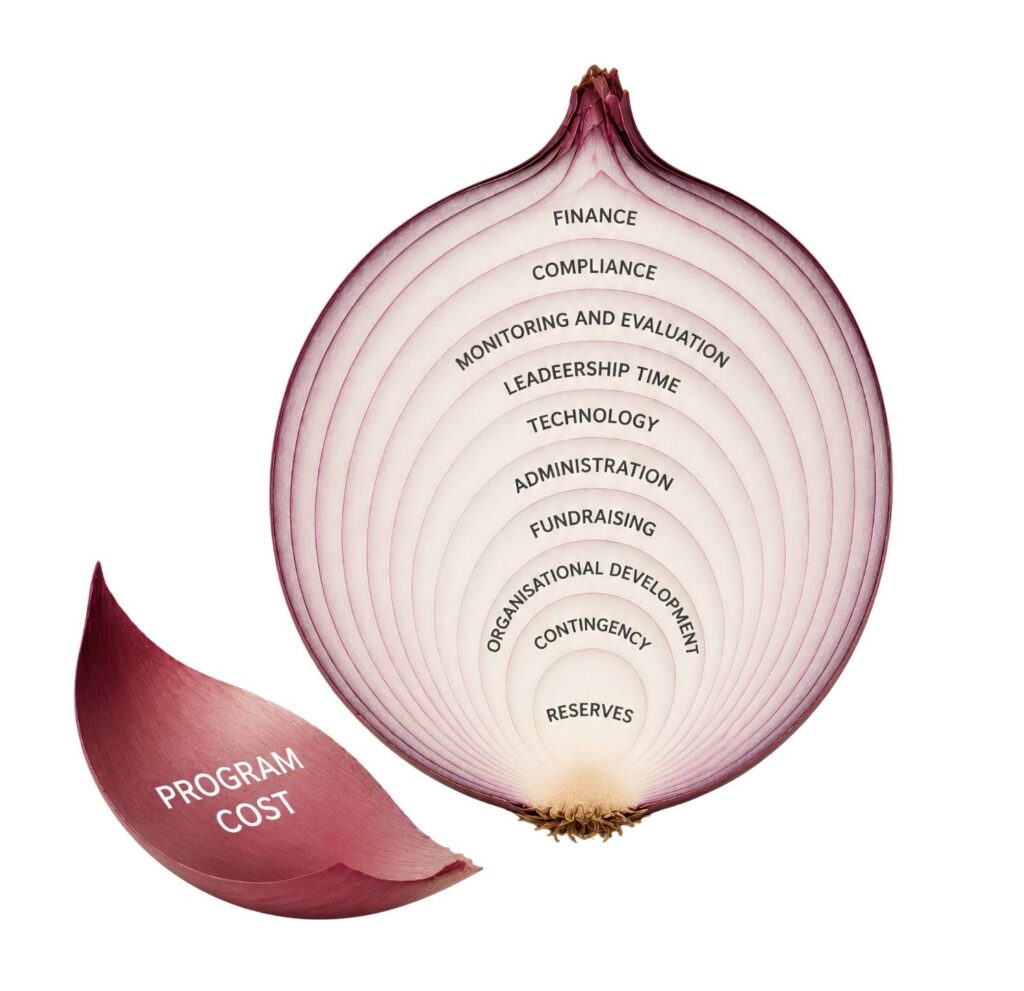
To help NGOs address this gap, we at Aria CFO Services developed the True Cost Computation and Communication Guidelines, in alignment with Bridgespan’s Pay-What-It-Takes India Initiative. At its core, true cost funding is not about asking for ‘more overheads’; it is about asking honestly for what impact requires.
What is true cost?
True cost is the complete cost required for a social purpose organisation (SPO) to function effectively and sustainably while delivering its mission.

Figure 1: True cost formula from Aria CFO Services True Cost Guidelines
Program costs are linked to mission activities such as service delivery, advocacy, research, implementation and monitoring. Support costs include finance, administration, fundraising, organisational development, and outreach and networking. Contingency provides a short-term safety net for unexpected expenses, while reserves help protect continuity and long-term resilience.
In our guidelines, we intentionally use the term support costs for expenses that are often described as ‘non-programmatic’ or ‘indirect’. This is not merely a language choice. Terms such as ‘non-programmatic’ or ‘indirect’ can make these expenses sound separate from, or less essential to, program delivery.
How does an SPO compute true cost?
Before approaching donors, an SPO must first understand its own cost structure. The purpose is not to turn the process into a complex finance exercise, but to build a clear and credible picture of what it really takes to deliver programs well.
Before approaching donors, an SPO must first understand its own cost structure. The purpose is not to turn the process into a complex finance exercise, but to build a clear and credible picture of what it really takes to deliver programs well.
A useful starting point is to look beyond the donor’s budget format and map the organisation’s own reality:-
- Map your functions
- program functions – directly deliver the mission
- Support functions that make those programs possible – such as finance, administration, fundraising, compliance, technology, and capacity building
- Split direct vs shared costs
Some costs are directly linked to one program or activity. Others are shared across programs or functions, such as office rent, senior leadership time, common technology tools, or finance team support. These shared costs should not remain hidden at the organisational level. They need to be allocated using a reasonable and documented basis that fits the organisation’s context.

Figure 2: Common allocation bases for shared costs
The aim is to arrive at a true cost view that includes program costs, support costs, contingency, and reserves. This helps fundraisers move the conversation from ‘please fund our overheads’ to ‘here is what it takes to protect program quality, compliance, continuity, and resilience.’
For organisations that want to go deeper, the True Cost Computation and Communication Guidelines provide a step-by-step approach to listing program and support functions, identifying activities and costs, classifying direct and shared costs, allocating and apportioning expenses, and arriving at the full true cost.
Can every donor fund every part of true cost?
No. This is where true cost conversations need strategy.
Not every donor can fund every expense. For example, a CSR donor may not be able to make a corpus donation under applicable CSR rules. Some donors may allow project-linked administration but not unrestricted reserves. Some may fund monitoring and evaluation but not fundraising. Others may support organisational development, leadership capacity, or technology if the case is made well.
The best strategy is not one standard pitch. It is a curated ask based on donor type, legal permissibility, funding policy, relationship stage and appetite for organisational strengthening. Bridgespan’s research, as referenced in the guidelines, identifies three key funder archetypes based on funders’ mindsets and the grant-making approaches that typically follow from them.
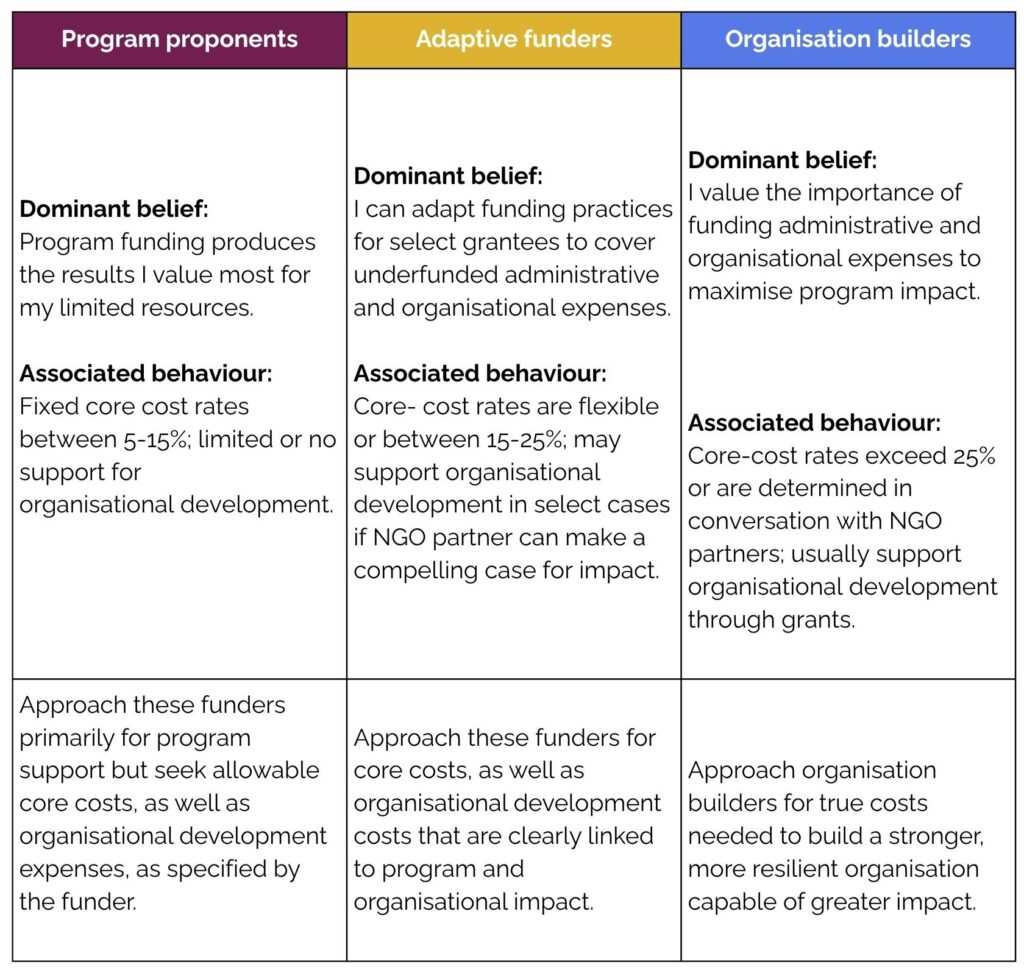
Figure 3: Funder archetypes for true cost conversations (Source - The Bridgespan Group)
How can fundraisers open the conversation?
Try starting with: ‘We would like to show you the true cost of delivering this program responsibly.’
Or: ‘These support costs are not separate from program outcomes; they protect quality, compliance, and continuity.’
Or: ‘Some components may fit your funding policy, while others may be better supported by another donor. Can we discuss which parts of the true cost your grant can support?’
What would this look like in practice?
Consider an education SPO running a ₹1 crore service delivery program. Its direct program costs are ₹80 lakh. Allocated support costs are ₹12 lakh, including finance, administration, M&E, technology, and management time. It estimates ₹3 lakh as contingency and identifies a ₹5 lakh reserve need to protect continuity during funding delays.
The true cost is ₹1 crore. However, the way this cost is raised will differ by donor type, legal permissibility, funding policy, relationship stage, and funder mindset.
One donor may act as a program proponent, preferring to fund direct program costs and project-linked components such as M&E, delivery technology, and permissible support costs. Another may be an adaptive funder, open to a negotiated indirect cost rate or allocated support costs if the SPO can show how these protect quality, compliance, and scale. A third may be an organisation builder, willing to fund organisational development, leadership capacity, reserves, technology strengthening, or financial resilience.
The same donor category can also behave differently over time. A new CSR, family foundation, HNI, or institutional funder may begin with program-linked funding, while a long-standing partner may be more open to supporting eligible organisational strengthening costs. The true cost remains the same; the ask changes based on what the donor can fund, is willing to fund, and trusts the SPO to deliver.
How do we move from overheads to resilience?
True cost funding is not asking for more than what is needed. It is asking for what is essential to deliver impact with integrity. When nonprofits compute, document, and communicate true cost with confidence, they move from overheads to resilience and from underfunded delivery to sustainable impact.

Ritu Jain
is a Chartered Accountant, CPA, and Co-founder & Partner at Aria CFO Services. Drawing from diverse legal and international volunteering experience, she specialises in non-profit tax regulations, process standardisation, and FCRA compliance. Ritu is passionate about helping social sector organisations build resilient, transparent, and seamless financial frameworks.

Ravi Bagaria
is a Chartered Accountant and Co-founder & Partner at Aria CFO Services. With over a decade of expertise in non-profit finance, he specialises in compliance, FCRA, and governance. Ravi is dedicated to strengthening the social sector by helping organisations build transparent, sustainable, and legally robust financial systems.
Copyright © 2026 India Leaders For Social Sector