
Guest Column
Unlocking the Diaspora:
Strategic Insights and Practical Tactics for Indian Nonprofits
Alex Counts - Executive Director, India Philanthropy Alliance
Shobha Viswanathan - Senior Managing Director, Indiaspora (USA & Global West)

A Big Opportunity
For decades, the Indian diaspora has quietly supported communities back home largely through remittances and informal family networks that filled gaps left by governments and formal institutions. Today, that quiet support is giving way to something far more structured and consequential. According to a landmark research by Dalberg, India Philanthropy Alliance and Indiaspora, Indian American philanthropic giving has nearly tripled since 2018, reaching an estimated $4–5 billion in 2024. Even more striking is the dramatic narrowing of the annual ‘giving gap’ — the disparity between what the diaspora is capable of giving and what it actually donates — which has plummeted from $2–3 billion down to just $1 billion in a matter of a few years.
This surge is not simply a byproduct of rising incomes. As detailed in Indiaspora’s comprehensive report, India and its Diaspora: Partners in Progress, the report reflects a deepening cultural commitment to giving back, positioning structured philanthropy as a vital pillar of the enduring partnership between the diaspora and India. Higher-income Indian Americans are now donating a larger share of their income than the US average, signalling that generosity, not just capacity, is growing. As Dhirendra Pratap Singh, CEO of Milaan Foundation, puts it, ‘The diaspora’s relationship with India is evolving, and so must ours with them. First-generation donors often give out of gratitude and a connection to home; the next generation wants data, transparency, and a seat at the table to help solve complex, systemic development problems.’
Over the next two decades, the Indian American community is expected to transfer approximately $2 trillion in wealth across generations.
Layered on top of this cultural shift is one of the most consequential economic events of our time: the Great Wealth Transfer. Over the next two decades, the Indian American community is expected to transfer approximately $2 trillion in wealth across generations. The scale of the opportunity this creates is staggering; if the next generation of inheritors donates just 1% of that wealth annually, it would yield $20 billion in giving each year. For Indian nonprofits, this is not merely a chance to close a funding gap. It is an opportunity to entirely redefine the scale and impact of global philanthropy.

Unlocking Funds by Understanding the Modern Diaspora Donor
Accessing this capital requires moving beyond monolithic assumptions about the diaspora. Fundraisers must recognise that different generations require distinct engagement strategies.
For first-generation donors, the philanthropic journey is frequently rooted in a profound sense of gratitude. Many wealthy Indian Americans feel deep appreciation for having received a high-quality, heavily subsidised education in India that positioned them for success in the American economy. Consequently, their initial giving is often hyper-local, focusing on educational institutions or initiatives in their home villages.
In contrast, the next wave of donors comprising second- and third-generation (NextGen) individuals, as well as women and novice givers, represents a distinct cohort with different ambitions and barriers. NextGen donors exhibit a strong passion for systemic global issues, particularly climate change and gender equity, and value impact data over anecdotes.
Crucially, many of these younger donors remain untapped simply because they have not been asked. Nearly a quarter of NextGen respondents report that they have not been solicited to donate to the causes they care about most. Furthermore, younger donors and women are highly drawn to collaborative, community-driven models of giving, such as giving circles. Roughly one quarter of NextGen donors and one-third of NextGen women express enthusiasm for participating in these collective structures, indicating they do not just want to write a check, they want to learn, connect, and co-create.
Younger donors and women are highly drawn to collaborative, community-driven models of giving.
Beneath these distinct donor profiles lies a fundamental truth about how diaspora philanthropy is actually catalysed. On one hand, fundraisers often witness what appears to be the sudden, almost magical appearance of a deeply generous donor, an occurrence that is almost always a matter of the right strategic advocacy or an institution crossing paths with a donor who was already eager to give. On the other hand, there is the slowly developed relationship, quietly nurtured over years of patient touchpoints, that eventually culminates in a transformative check. Yet in both scenarios, the underlying engine is identical: thoughtful, sustained time spent on advocacy, educating the community, and building authentic relationships. Even when an ultimate breakthrough feels entirely serendipitous, it is invariably the harvest of trust-building seeds planted long before.
Three Strategic Pillars of Better Engagement
Recognising these demographic shifts is the first step, but capturing the opportunity requires actionable, strategic pillars of engagement.
- Demystify the Process: For many NextGen and novice donors, the greatest barrier to giving is simply not knowing where to start or how to identify high-quality nonprofits based in India. Nonprofits must actively invest in resources such as accessible explainers and clear directories that demystify the giving journey and position the organisation as a trusted guide. Joining a network like IPA and getting rated by a charity watchdog group also helps inspire confidence.
- Build Trust Through Impact: One historical reason Indian Americans volunteered at high rates but gave comparatively little was a lingering distrust regarding the competence or honesty of charities operating thousands of miles away. To move past this scepticism, nonprofits must enhance their financial transparency and demonstrate an undeniable, visceral impact. Fundraisers should move away from purely anecdotal appeals and instead ‘show rather than tell’. They can do this by utilising high-quality videos, compelling photography, and curated field trips that allow donors to experience the change their money creates directly. Singh of Milaan emphasised that ‘we’ve built our girls’ leadership programs around that shift, inviting donors of all ages into real conversations about impact, seen through an investor’s lens rather than a giver’s.’
- Engage the Family Unit: Because philanthropic identity is often formed within families, the impending Great Wealth Transfer makes multigenerational engagement critical. Organisations must facilitate conversations that bridge the gap between first-generation founders and NextGen inheritors. By involving younger family members not merely as passive donors but as active decision-makers and emerging leaders, nonprofits can cultivate relationships that compound in value over time.
The Successful Fundraiser’s Playbook
To operationalise these strategic pillars, Indian nonprofits must adopt a rigorous tactical playbook tailored to the US landscape.
- Convert Volunteers to Donors: Research indicates that Indian Americans volunteer at nearly double the national rate. Fundraisers should leverage this high volunteerism by letting supporters start in their comfort zone. By providing meaningful volunteer experiences, organisations can build deep affinity and gradually entice individuals into financial giving by making the donation process easy and enjoyable.
- Ask for Advice, Not Just Money: A fundamental tenet of major gift fundraising is treating wealthy donors as intellectual partners. As the adage goes, ‘If you want advice, ask for money. If you want money, ask for advice.’ Engaging wealthy donors to grapple with an organisation’s most vexing challenges not only yields valuable insights but also significantly deepens their affinity for the nonprofit.
- Build US Infrastructure: Establishing a formal presence in the United States is vital, but nonprofits must choose the right legal and operational structure. While setting up a dedicated 501(c)(3) allows an organisation to build a strong US board, utilising a fiscal sponsor like Myriad USA may be a leaner, more practical choice for others. Regardless of the formal entity, success often hinges on cultivating a dedicated network of daily ambassadors; volunteers who wake up every morning with the intention of winning tangible victories for a nonprofit with which they are aligned.
- Utilise Ecosystem Resources: Indian nonprofits do not need to navigate the American philanthropic landscape alone. Curated communities like Indiaspora, focusing on collective social impact, offer an opportunity to connect with like-minded people around the globe. Experts like those who formed the India Philanthropy Advisers Network in 2025 offer specialised consulting to help organisations position themselves effectively with diaspora donors. Platforms like the annual Philanthropy Summit that Indiaspora now convenes with IPA actively bridge the trust gap between overseas donors and grassroots organisations, providing the credentialing infrastructure that gives philanthropic capital somewhere credible to land. Campaigns like the India Philanthropy Alliance’s India Giving Day reinforce this further, functioning as a kind of seal of approval that signals transparency and accountability to cautious first-time givers.

Conclusion
The data reveals an unprecedented and fleeting opportunity: the Indian American diaspora is within striking distance of completely closing its $1 billion giving gap. This focus is especially urgent today as traditional foreign philanthropy to India declines sharply, leaving a critical funding gap that diaspora capital is uniquely positioned to fill. With the historic $2 trillion Great Wealth Transfer underway, now is the fleeting window to engage and shape the strategic giving habits of the next generation of donors before their practices solidify. By combining a deep understanding of the diaspora’s evolving, multigenerational psyche with rigorous, transparent fundraising mechanics, Indian nonprofits can do more than secure essential capital. They can forge a lasting culture of generosity, transform the funding ecosystem, and set a bold new global standard for diaspora philanthropy.

is the executive director of the India Philanthropy Alliance and the author of four books, including his acclaimed midlife memoir Changing the World Without Losing Your Mind: Leadership Lessons from Three Decades of Social Entrepreneurship. He is also the founder of Grameen Foundation and AMC Consulting
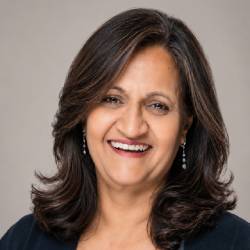
Shobha Viswanathan
is the Senior Managing Director, USA and Global West, at
Indiaspora, a nonprofit community of powerful global Indian leaders committed to
inspiring the diaspora to be a force for good.
Copyright © 2026 India Leaders For Social Sector