
ILSS Insights
Building Better Boards
Reflections from Social Sector Leaders
Meenal Manolika - Associate Director, ILSS

In Brief
- Use subcommittees strategically: Focused groups can deepen board engagement, draw on specific expertise and create a pipeline of future board members.
- Assess board fit continuously: Court prospective members over time and continue to match the organisation’s evolving needs.
- Make meetings meaningful: Good preparation, quality board packs, regular meetings and exposure to the organisation’s work can strengthen engagement.
- Keep boards current: Regular compliance updates and a clear understanding of the organisation’s current work are essential to effective oversight.
Subcommittees as a High-Leverage Structural Force
Subcommittees, done well, are the single highest-leverage structural change a board can make. Dedicated subcommittees engage individual members for focused problem-solving, chosen for their expertise and interests. In the experience of some organisations, subcommittees also became a pipeline: outside experts brought in for a specific problem often became the strongest future candidates for the governing board itself.
The rules of engagement matter as much as the structure. A working model emerged: minimum meeting frequency, defined membership, a clear chair, often an outside expert rather than a governing council member and a standing slot to present at every board meeting, with the executive director and relevant functional head sitting in throughout. This helps the conversations move away from a single executive presenting for the full meeting toward each board member owning a specific area — fundraising, finance, digital, talent — and coming prepared to engage.
Board Fit as an Ongoing Evaluation
Building a courtship period emerged as one of the least visible but most consequential practices.
Building a courtship period emerged as one of the least visible but most consequential practices. Multi-year relationships with a prospective board member, well before formal induction, like attending meetings informally, visiting field sites at their own expense, staying in periodic touch, often did more to secure genuine commitment than any formal ask. This, for some organisations, produced informal brand ambassadors who championed the cause for years before formally joining a board.
Fit, several participants argued, is best understood as an ongoing check rather than a one-time decision at induction. A board member can be well-intentioned and deeply committed, and still be wrong for a particular organisation. Their passion for one issue can pull the organisation’s focus away from its broader mandate. Mapping the capabilities a board needs for its next phase proved valuable, since those needs shift as the organisation grows, and we should be deliberately creating space and reasons for younger people to join boards.
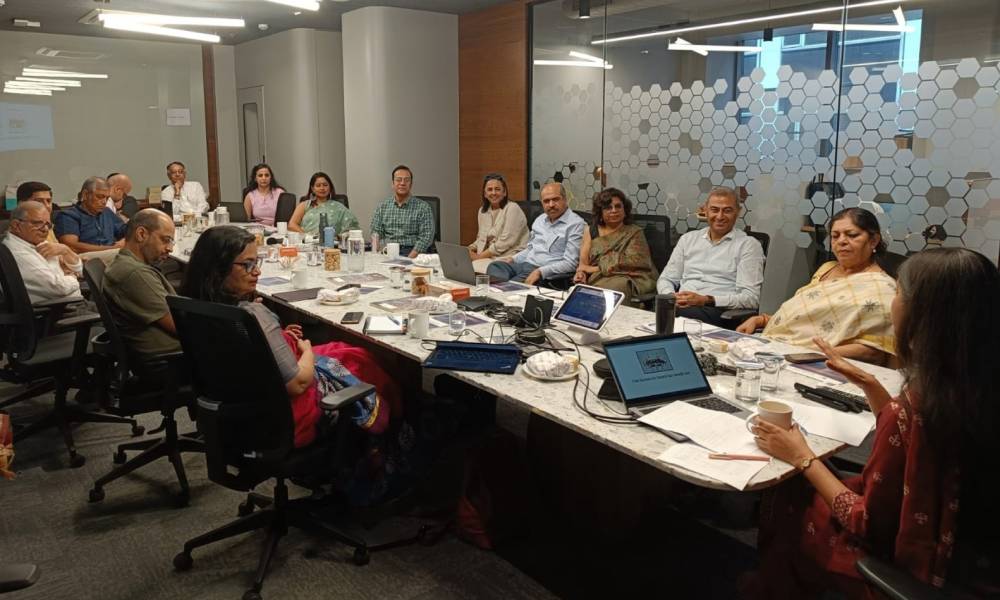
Through the conversation, there emerged a need for a way board members can assess their own ongoing value addition: a short, honest self-diagnostic, since individual board assessment remains rare.
Running Good Board Meetings
The company agreed on the importance of clear and well-timed communication in preparation for board meetings. Some best practices that emerged were on calendaring meetings far in advance — a year ahead if possible — and meeting in person wherever feasible. Emphasis was placed on preparing and circulating a genuinely high-quality board pack well in advance, so people understand where the organisation stands and what’s being asked of them. Additionally, it is important to establish and maintain a consistent culture on how meetings are conducted: with room to challenge but not to disrupt. Each board has a slightly different dynamic, and new members learn it by going through meetings themselves.
Boards that meet infrequently, or whose members have never seen the work firsthand, tend to stay thin in engagement regardless of how well the paperwork is prepared.Boards that meet infrequently, or whose members have never seen the work firsthand, tend to stay thin in engagement regardless of how well the paperwork is prepared.
Boards that meet infrequently, or whose members have never seen the work firsthand, tend to stay thin in engagement regardless of how well the paperwork is prepared. Where getting members to the field is difficult, bringing the field into the boardroom has proven effective.
Keeping the Board Up to Date on Compliance
Recent regulatory changes add a real administrative burden on organisations and board members alike. Officials increasingly expect board members to speak knowledgeably about current work, not work from five years ago. A board that cannot do so becomes a compliance risk in itself, while one that stays current builds real credibility. In some organisations, translating compliance briefings into languages board members are actually comfortable in made a measurable difference in how much was absorbed. A dedicated compliance update at every board meeting is now considered essential.
Curating Talent for Boards
There are over 5 lakh registered nonprofits in India, with many more unregistered, and the number keeps growing. There is a growing need for board members as well. But the pool of people willing and equipped to serve well is a small fraction of what the sector needs. Left unaddressed, this risks the same small set of names circulating across every board in the ecosystem.
What emerged instead was a case for deliberate pipeline-building: mentoring people onto boards before they feel ready, bringing in first-time and younger board members, and looking beyond the usual corporate and bureaucratic circles. Several participants also called for celebrating outstanding board members publicly, profiling their contribution rather than their credentials, so board service reads as distinction rather than obligation.
A closing reflection noted that a board at its best functions as a shock absorber for what can otherwise be a lonely role. Understanding that success looks different for a board member than for a founder, and that is where governance really begins.

Meenal Manolika is a social sector professional dedicated to shaping how the sector thinks, works, and creates catalytic impact. At India Leaders for Social Sector (ILSS), she helped set up the Centre of Excellence for Fundraising, running the India Fundraising Conference and driving knowledge production to strengthen fundraising practice across India’s nonprofits. She now serves as Associate Director in the CEO’s office, leading strategic initiatives and knowledge projects that advance sector-wide effectiveness. Prior to ILSS, she built capacity, strengthened communities, and produced knowledge for gender justice movements across South Asia through her work with Sangat, a feminist network. She holds a B.E. from BIT Mesra and is a Young India Fellow.
Copyright © 2026 India Leaders For Social Sector