
Beyond Representation, Towards Inclusion
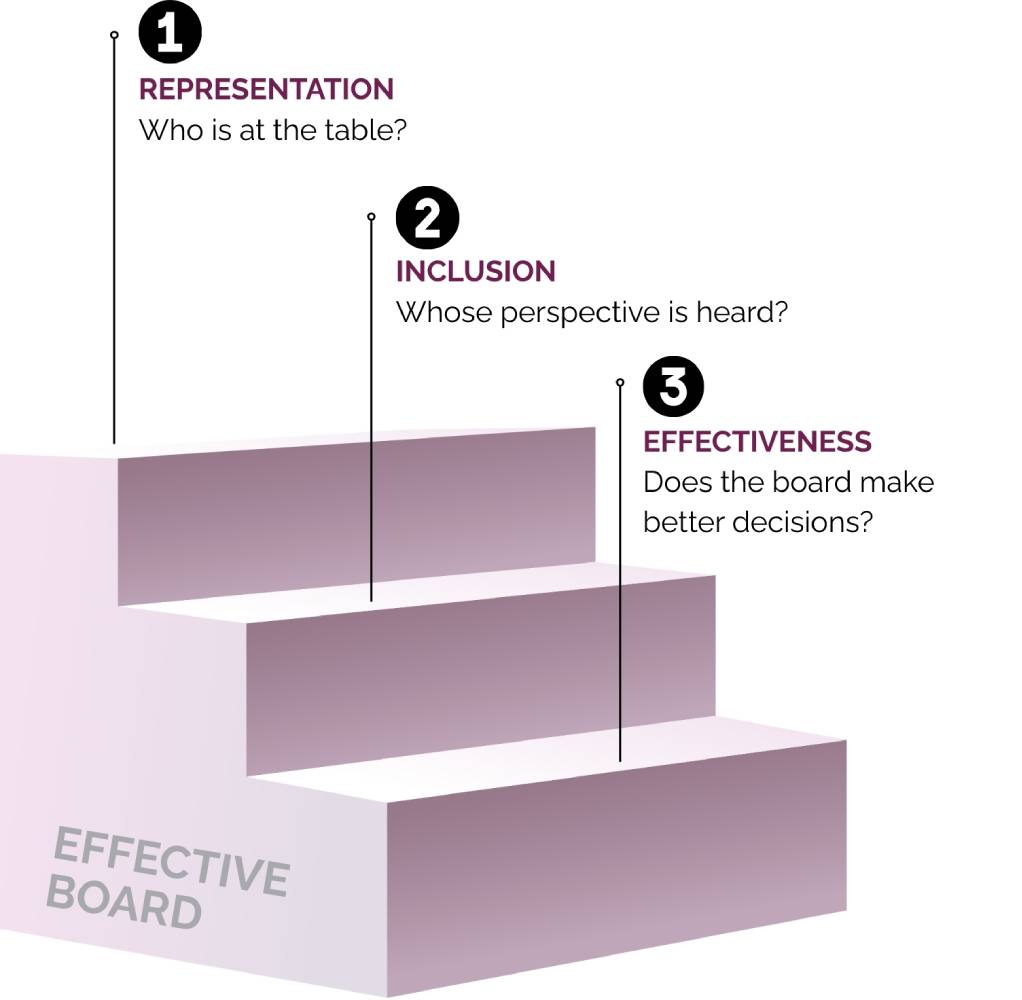
What Makes a Board Effective
In Brief
- Diversity is more than representation: Gender, age, experience, culture and lived realities all shape the perspectives a board brings to decision-making.
- Diversity must enable dialogue: The value of a diverse board lies in creating space for constructive challenge, disagreement and different points of view.
- Boards need to evolve: Thoughtful composition, regular renewal, succession planning and attention to tenure are key to effective governance.
- The board chair matters: From creating an inclusive environment to managing power dynamics, the chair plays a critical role in ensuring the board works effectively as a collective.
- Make room for new voices: Boards need the humility to recognise what they may not know and actively seek new perspectives and expertise.
In a recent ILSS webinar on ‘Gender and Diversity in the Boardroom’, Anu Prasad, Founder and CEO of ILSS, was in conversation with Govind Iyer, Independent Director at Infosys, Senior Adviser at Warburg Pincus, and Chairperson of SVP India, and Ingrid Srinath, Board Chair of Resource Alliance and Vice Chair of Co-Impact Philanthropic Funds. Together, they explored the role of diversity in board leadership and governance, and what it takes to build boards that are thoughtful, inclusive and effective. Here are some edited excerpts from the conversation.
Anu: Diversity and inclusion on boards — what is the first thing that comes to your mind?
Govind: Today, it is ‘diverse views and a group of people with challenging views’. Fifteen years ago, my first thought would have been ‘representation’.
Ingrid: I’m always reminded of something Brené Brown once said. She asked, ‘What is the opposite of inclusion?’ Her answer was, ‘Fitting in.’ That was a mind-opening moment that made me realise that inclusion is not about asking people to fit into what already exists.
Anu: To me it would be outliers: people you would normally not expect to see in the boardroom.
Anu: Tell us about your first board experience. What was it like as a leader facing your board for the first time?
Ingrid: The board had six men, almost entirely from the corporate sector, all upper-class, upper-caste and urban and one woman who had nonprofit experience. The board was mostly appointed by the founder and served for over 15 years. In contrast, our leadership team was entirely women, with only two of us having significant for-profit experience. The organisation was also in crisis: the founder had died, targets were being missed, decision-making was slow, and the board–leadership relationship had become adversarial.
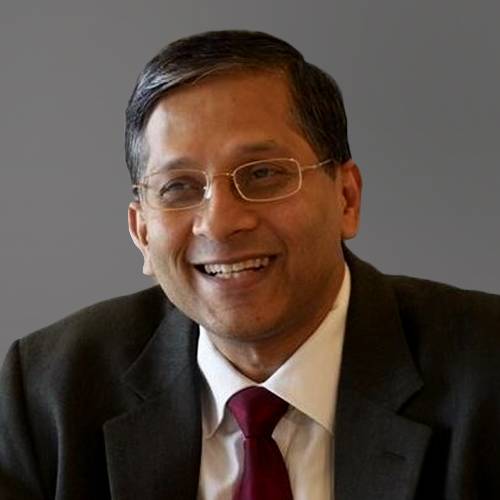
Govind Iyer
Independent Director, Infosys; Senior Adviser, Warburg Pincus; Chairperson, SVP India
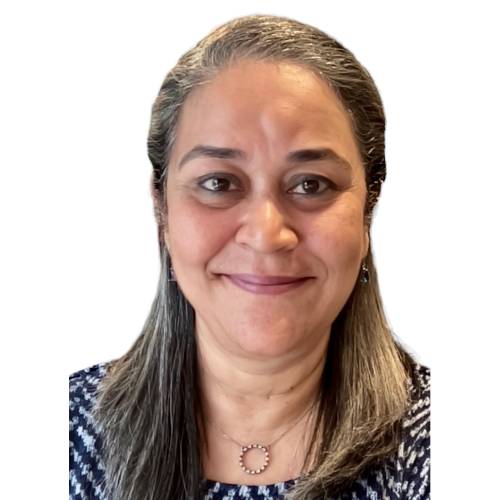
Ingrid Srinath
Board Chair, Resource Alliance; Vice Chair, Co-Impact Philanthropic Fund
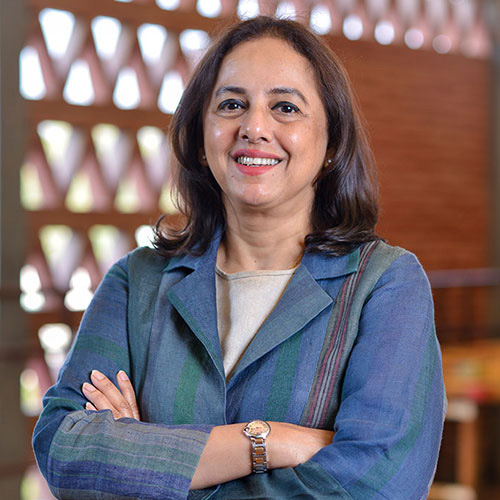
Anu Prasad
Founder-CEO, ILSS
Many founders are not driven by making money. They have a mission to solve a problem in society, and they are deeply driven by that. Why do they need outsiders like us involved? The reasons are many. Most often the main reason is fundraising. They want people from the corporate sector to open their networks to fund the organisation. And that can be myopic of them.
These two organisations were my entry points into the social sector. Of course, the dinner conversations at home when we were kids played a role, just as the dinner conversations at home when our kids were growing up influenced them. If you want to know more about my initial experiences when I transitioned into this sector, you should look at this article that I wrote for ILSS many years ago – Drink coffee, lots of it
Why I still stay on in the social sector is more important. The mission, the passionate people I meet, the change we experience – these are great drivers. At the same time, it can be extremely frustrating because people are wired differently, there may be mission misalignment, etc.
But within a year, we had won their trust. We worked with some of them to prevent a hostile takeover, bring a major change in structuring, rework the strategy and eventually persuade all but one to step down and make way for a more diverse board with greater representation of women, younger people and those with social-sector expertise.
Anu: Is neutrality in the boardroom really a myth?
Ingrid: I think most people on boards of nonprofits are well-intentioned but largely unconscious of their biases, and blinkered by their own life experiences. Corporate leaders, for instance, may assume that success is purely meritocratic and believe that what cannot be measured cannot be managed, or that higher pay automatically drives performance.
I have also been struck by how women often present themselves on boards with a tendency to wait to be asked, hedge their views or avoid confrontation, even when they have greater expertise.
I have also been struck by how women often present themselves on boards with a tendency to wait to be asked, hedge their views or avoid confrontation, even when they have greater expertise. There is a sense of diffidence, even among women who are more qualified than others. But what concerns me most are rubber-stamp boards: members who don’t inform themselves about the organisation, its ecosystem or regulatory environment, and sometimes haven’t even read the balance sheet. Sadly, this is even more common on foundation boards than nonprofit boards.
Anu: When you think about gender and diversity in the boardroom, what does that mean to you?
Govind: Gender is a very important component in the boardroom, but there are many other dimensions of diversity. There’s also age, culture and experience. For instance, a board made up entirely of people from one region may miss important cultural nuances when operating across the country. Similarly, people bring very different perspectives depending on the environment they have worked in or come from other backgrounds. The more diverse the perspectives in a boardroom, the better the decisions, provided the challenge is constructive and issue-based, not personal. All boards come with good intent. So gender matters, but it is certainly not the only dimension.
Anu: You have advised many boards on leadership and succession. What distinguishes organisations that treat diversity as a strategic advantage rather than a compliance requirement?
When I started doing board work 20 years ago, diversity was largely seen as a representation issue. Today, I see it fundamentally as a governance issue.
Govind: When I started doing board work 20 years ago, diversity was largely seen as a representation issue. Today, I see it fundamentally as a governance issue. The question is no longer whether a board should be diverse, but whether it can fulfil its fiduciary responsibility without diversity of thought, experience and perspective. If everyone around the table has similar careers, education and networks, the quality of challenge becomes much weaker. The purpose of diversity isn’t agreement; it is constructive disagreement. Boards that don’t recognise this are ultimately doing a disservice to their stakeholders.
Anu: Women are increasingly leading social-sector organisations, yet remain underrepresented on nonprofit boards. Why doesn’t leadership automatically translate into board representation?
Ingrid: Patriarchy remains deeply entrenched. Even women CEOs may calculate which board members will enhance their organisation’s standing with donors and open doors to money and influence. That often means turning to people from the existing power structure, which remains predominantly male.
The resistance to change is often fierce. Sometimes, funders can help overcome this inertia. I know of a case where a donor made funding conditional on at least one-third of the board being women. The board responded by making it one-third of either gender, so that men wouldn’t become an even smaller minority. Normally, I would resist such grant conditionalities, but in this case it was a positive one and helped push the organisation towards greater diversity.
I would look for people of substance, not those who are on too many boards. I would also see that they bring lived experience of the issue you are purporting to address.
I would look for people of substance, not those who are on too many boards. I would also see that they bring lived experience of the issue you are purporting to address.
Anu: What distinguishes boards that are thoughtful and effective from those that aren’t? What do you look for when assessing a board?
Govind: I first look at its composition and tenure: when members joined, how long they have served, and whether there is any close relationship with the founder. If I see regular renewal, no one serving for more than seven or eight years, and new members coming in without prior relationships with the existing board, it gives me an initial sense of diversity.
What particularly distinguishes the best boards I have seen is planned succession. This is now well established in many leading corporates, but I see less of it in the nonprofit sector, partly because there is greater comfort with people who have been known for a long time, and partly because the pool of people willing or able to serve on nonprofit boards is smaller.
Unilever, Cipla and Asian Paints are examples of corporate boards I have seen do this thoughtfully. They have strong processes for succession and bring diversity in terms of geography, age and experience. I think there are a number of boards that have recognised that thoughtful composition and planned succession are fundamental to good governance.
Anu: In the social sector, boards can sometimes stay in place well beyond their intended tenure. You tend to get comfortable, and then suddenly realise that the board needs to change. How does one manage that transition while retaining continuity and institutional memory?
Ingrid: I think it starts with frank conversations, perhaps individually with board members. In a particular case where we needed to change the entire board, external facilitation was particularly helpful. An independent facilitator could ask difficult questions, read between the lines and help the board think objectively about its future composition and who was best placed to contribute.
But it has to be a planned, staggered process. You can’t have the entire board step down at once; you need to retain some institutional memory and continuity. A well-facilitated board retreat can help surface these issues and, importantly, set a plan in motion for a gradual transition.
Anu: Tell us a little more about board retreats. What makes them useful, and what should they accomplish?
A retreat is a good opportunity to ask: Where do we see this board five years from now? That conversation naturally brings up tenure, term limits and the skills and perspectives the board will need.
Govind: A retreat is a good opportunity to ask: Where do we see this board five years from now? That conversation naturally brings up tenure, term limits and the skills and perspectives the board will need.
A retreat should focus not only on the organisation’s future and strategy, but also on feedback on the founder or CEO and on each other. This is where an external facilitator can be particularly valuable. I have always used an external facilitator for my own board retreats because they can create the space for candid feedback that is difficult to generate internally. A formal or informal board evaluation can also be a useful starting point.
Ingrid: I see a board evaluation not as an exam or a pass–fail test, but as an opportunity for the board and executive leadership to step back and ask: ‘How are we doing as a collective in steering this organisation?’ It can include closed and open-ended questions, and even 360-degree feedback. Most importantly, it creates a trigger for discussing what needs to be renewed, refreshed or let go.
Anu: What is the role of the board chair in creating an effective board?
Govind: The role of the chair is critical in two ways. First, in ensuring that the CEO is successful; and second, in ensuring that it works to the maximum benefit of the institution. The chair has to create a safe space where people feel included and are able to express different views. They also have an important role in ensuring that the board itself is functioning well, including through processes such as board evaluations and effective CEO reviews.
The chair has to build a board that functions as a collective in pursuit of the organisation’s purpose.
Ingrid: The chair has to build a board that functions as a collective in pursuit of the organisation’s purpose. That means managing power dynamics, preventing groupthink and questioning consensus when it comes too easily. If everyone agrees too quickly, the chair needs to ask: are we really asking the right questions? The chair also has to ensure that board members behave consistently with the organisation’s values and that everyone can express themselves with dignity.
Anu: Who should be responsible for bringing new members onto the board — the board chair, the CEO, or both in consultation with each other?
Ingrid: The governance committee, or an equivalent body, should review board tenure, replacement and renewal at least annually. On a small board I currently serve on, we are only six people, so having multiple committees isn’t practical. Instead, we did a good risk analysis across dimensions and then each board member volunteered to focus on a particular subset of risks, with the support of the other board members. That’s one way of creating clear responsibilities when you don’t have formal committee structures.
Govind: It depends on the stage of the organisation and its growth, but board composition is the responsibility of the chair and the governance committee. It is not the CEO’s responsibility. The CEO has a voice in who comes onto the board, but not the choice and certainly not a veto.
Anu: As social-purpose organisations navigate uncertainty, compliance, regulatory changes and shifting stakeholder expectations, what new perspectives or competencies should boards prioritise beyond traditional definitions of diversity?
Ingrid: If your board is entirely made up of people over 50, you’re in trouble. You risk losing touch with where communities and society are going and can easily be blindsided by changes. We need to prioritise youth much more, because it brings a different perspective and a different understanding of the future.
I would also reiterate the importance of lived experience. The more distant you are from the people and communities you serve, the greater the risk of becoming disconnected from reality. Ideally, boards should include people from those communities, or at least people with a deep understanding of them.
You don’t necessarily need every kind of technical expertise on the board. What you need is a board that can work intelligently with specialists and is open to seeking external advice when necessary, whether on legal issues, technology, AI or other emerging areas.
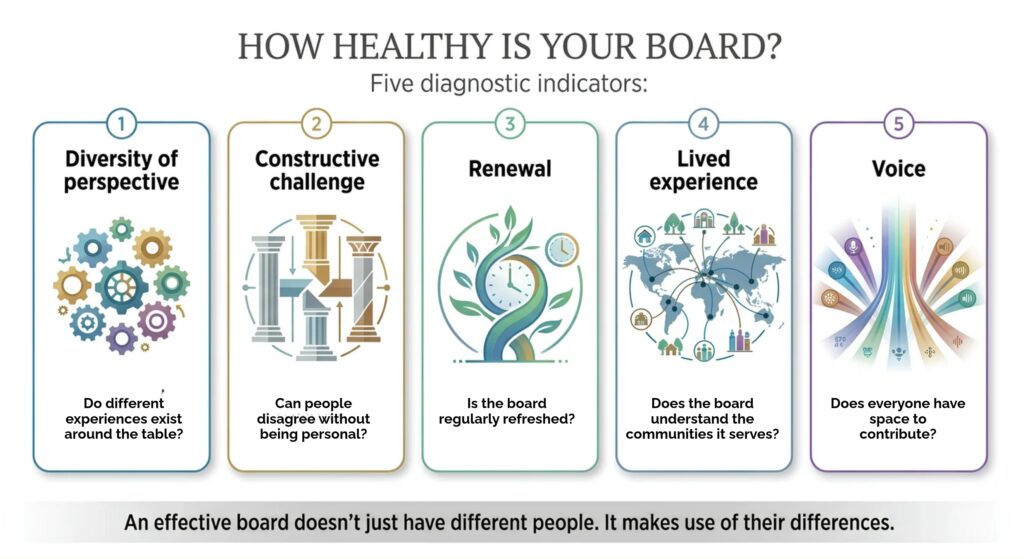
You don’t necessarily need every kind of technical expertise on the board. What you need is a board that can work intelligently with specialists and is open to seeking external advice when necessary, whether on legal issues, technology, AI or other emerging areas. And finally, I would add humility. Boards need people who are open to new ideas and willing to seek expertise rather than assuming they already have all the answers.
I think that is also an interesting distinction when it comes to gender. Many men on boards come in assuming they know the answers, whereas many of the women I know come in assuming they don’t, and that openness can be a real strength.
Anu Prasad: I have been to board meetings where one very experienced leader can sometimes speak 80–85% of the time. Though their points may be entirely valid, but in doing so, they can overlook the fact that others around the table may have valuable perspectives that never get heard. When people have so much to offer, we must create the space for them to contribute in every board meeting. Only when every voice is heard can a board truly fulfill its role and operate at its full potential
Copyright © 2026 India Leaders For Social Sector