
Guest Column
Moving Beyond the Playbook
Roopa Kudva,
Ex-Managing Partner, Omidyar Network, Author - Leadership Beyond the Playbook
Purpose: necessary but not sufficient
Purpose is a word we hear a lot, but it often feels abstract — almost like a riddle. Because the term feels abstract, it often gets dismissed as fluff or something nice to talk about.
Yet when people find purpose in their work, everything feels more meaningful. Work becomes a source of pride and energy. It is one of the strongest antidotes to burnout and the feeling of running endlessly on a treadmill of meetings and emails.
But purpose does not arrive neatly formed. It emerges through curiosity and immersion in real problems — staying close to the work and noticing what consistently draws your attention and energy. It develops through role models — observing how others make difficult choices under pressure and what they refuse to compromise on. And it takes shape through everyday leadership actions: how leaders hire, whom they create opportunities for, and whether they invest in inclusion, mentoring and enabling others.
Purpose is also not constant. As roles expand, constraints intensify and personal contexts change, what purpose asks of a leader also evolves.
In the nonprofit world, purpose is often assumed because the mission itself is meaningful. Yet burnout and mission drift are still common. The issue is not a lack of purpose but the gap between talking about purpose and allowing it to shape real decisions and ways of working.
Making purpose operational
In my own experience, purpose becomes meaningful only when it guides decisions. When that connection weakens, even deeply mission-driven leaders begin to feel depleted.
For example, when I was at Crisil, our purpose of making markets function better brought clarity to where we focused our energy and attention. It meant engaging deeply with the investor community that relied on our ratings, not only with the issuers who paid for them.
Purpose has to shape what leaders say yes to, what they say no to and which trade-offs they are willing to accept. In nonprofit organisations, this becomes most visible when funding pressures arise. Leaders often face difficult questions. Does this opportunity advance our core mission, or does it slowly pull us toward mission creep? Are we adapting our methods while staying true to our intent, or are we gradually moving away from it? Without that internal compass, short-term funding logic can quietly replace long-term purpose.
When I moved to impact investing at Omidyar Network India, our purpose of creating opportunities for India’s ‘Next Half Billion’ was applied in a practical way. In every investment discussion, we examined what proportion of the business’s likely customers would come from this segment and went ahead with the investment if this segment was material.
Used in this way, purpose becomes a living compass — revisited over time and most valuable when choices are hardest.
The changing nature of leadership
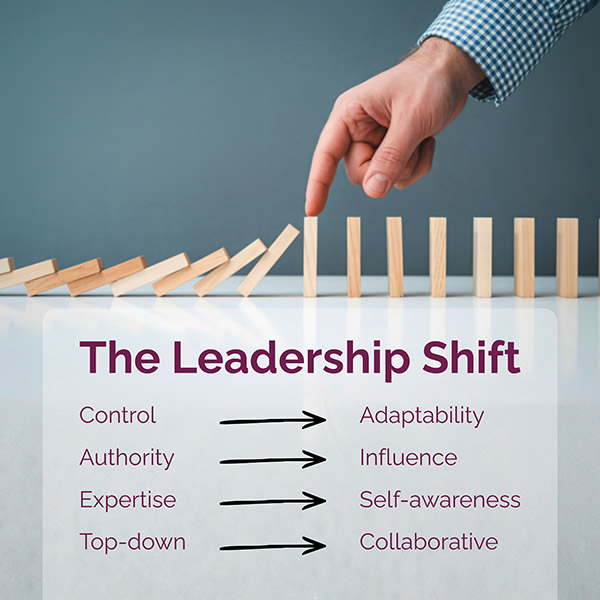
The challenges faced by leaders in the social sector make this shift even more visible. Missions are ambitious, resources are constrained and progress often depends on collaboration across governments, funders and ecosystem partners.
Leadership is not defined by power; it’s measured by the impact you make. The best leaders I have seen were not known for their titles, but by the choices they made daily — sometimes in boardrooms, sometimes in moments of self-doubt.
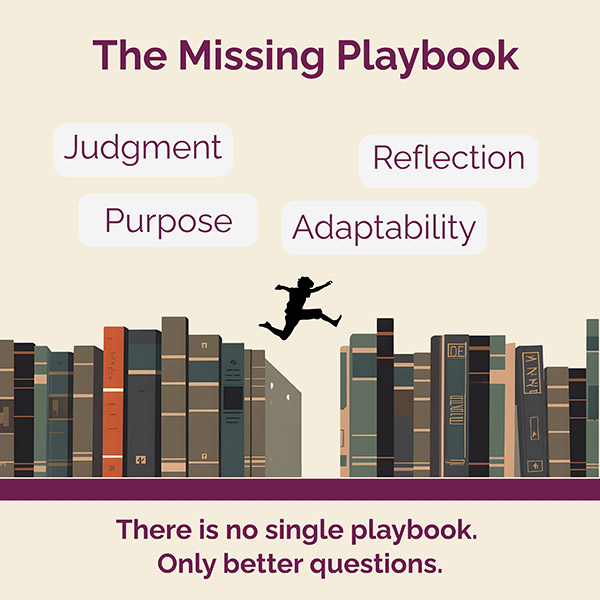
Leadership in this environment rarely follows a predictable playbook. It requires judgment, reflection and the ability to adapt continuously.
Breadth of perspective
In a world increasingly driven by data and instant information, it’s tempting to believe that if you just had a little more information, you could make the perfect decision. But the reality is, no matter how much data you have, you’ll always face some level of uncertainty. As a leader, your role is not to eliminate uncertainty but to make the best decision with the information available.
This is particularly relevant in the social sector. Issues such as education, healthcare, financial inclusion or climate change cannot be solved by any one organisation acting alone. Progress often depends on collaboration across government, philanthropy, civil society and the private sector. Leaders who are able to bridge these worlds often have the greatest impact.
Resilience and the ability to learn
Resilience has also been redefined. It is not simply about enduring pressure or ‘bouncing back’ from setbacks. It is about learning, adapting and emerging stronger. Leaders who acknowledge what has gone wrong, reflect openly and move forward with composure build trust within their teams. Trust, in turn, becomes the foundation of organisational resilience.
This mindset is especially important in mission-driven work where outcomes often take time to materialise, and progress is rarely linear.
‘Failure is an inevitable part of leadership. No matter how experienced or prepared you are, some decisions will go wrong, some strategies will miss the mark and some risks will not pay off. The question is not if you will fail, but how you will respond when you do.’
Leadership in this environment rarely follows a predictable playbook. It requires judgment, reflection and the ability to adapt continuously.
Communication and trust
‘Authenticity and transparency build trust. The more real you are in your communications, the more people will believe what you say. But that doesn’t mean you need to share everything. There’s a balance.’
In organisations working on complex social challenges, this becomes even more important. Leaders must align diverse stakeholders — teams, partners, governments and donors — around a shared understanding of the mission and the path forward.
Leadership is a personal journey
Leadership in the social sector often requires a shift in mindset. In business, leaders frequently have authority over resources and decisions. In the social sector, influence, collaboration and trust matter even more.
Real progress often depends on working across institutions — governments, nonprofits, philanthropies and communities. Outcomes may take years to materialise, and success is rarely the result of a single organisation acting alone.
Over time, the definition of success itself changes. It becomes less about immediate outcomes and more about building institutions and platforms that endure and continue creating impact well beyond the tenure of any one leader.
Leadership today is not about having a playbook. No two leadership paths are the same. Your most effective leadership moves may feel counter-intuitive, especially to others. When I shifted from leading a large company and a well-known brand to an impact investing firm that no one in my company had heard of, I sensed my colleagues’ scepticism. But that’s what was right for me.
Each of us will make different choices from others. Leadership does not mean following someone else’s path, but creating your own based on your context, your values and the fundamentals that matter most to you.
The most effective leaders are those who combine purpose with judgment, breadth with humility and conviction with openness, crafting their own leadership path while enabling others to do the same.


Roopa Kudva
Ex-Managing Partner, Omidyar Network, Author – Leadership Beyond the Playbook.
Roopa Kudva is a business leader, early-stage investor, and board director with decades of experience in financial and investment sectors. She led Omidyar Network India as Managing Partner, making investments using technology to build sustainable, impactful solutions for inclusive growth and create opportunities for India’s ‘Next Half Billion’. Roopa’s book ‘Leadership Beyond the Playbook’ (Penguin) is a national bestseller.
Copyright © 2026 India Leaders For Social Sector
Write to us at communications@indialeadersforsocialsector.com