
Alumni Spotlight
Clarity, Conviction, and Quiet Shifts
Leadership Journeys of Garima Garg and Trupti Mulajkar
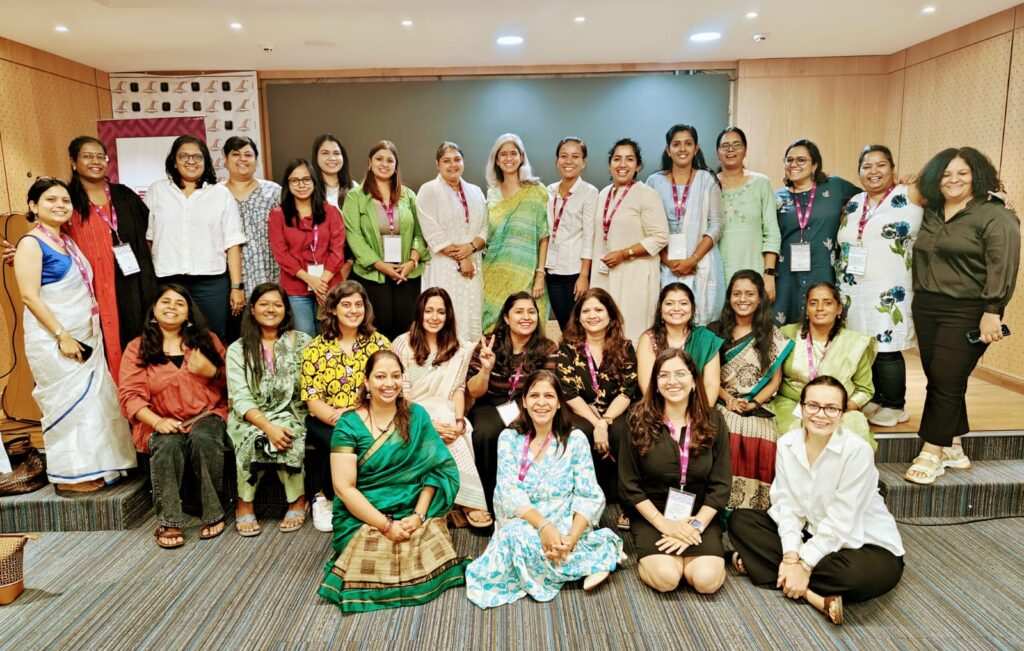
Leadership journeys in the social sector are often shaped as much by reflection as by action. Recently, ILSS engaged in a conversation with Garima Garg (Head, Max India Foundation) and Trupti Mulajkar (Manager-Corporate Partnerships, IIT Bombay Development and Relations Foundation), both alums of The ILSS Emerging Women’s Leadership Program (EWLP), to follow up on their leadership journeys post the program.
What emerged were not just personal stories of growth, but insights that resonate more widely for women navigating leadership in the social sector. Their experiences show us evidence of the quiet yet significant shifts that occur when leaders are given structured space to reflect, question, and reframe how they see themselves and their work. We capture here an exploration of these shifts: how two leaders came to recognise, refine, and more fully inhabit the leadership they already held.
Reframing Leadership from Within
For Garima, leadership did not arrive as a new responsibility. It emerged as a new understanding of the responsibility she already held. In her role, she works across a wide network of stakeholders, aligning diverse priorities towards a shared social purpose. Yet, for a long time, she did not see this as leadership in the conventional sense. It was through guided reflection that she began to recognise the leadership possibilities in her role across convening, aligning and sustaining collective effort. This recognition marked a key shift in seeing herself as someone who shaped direction.
Today, she approaches strategic conversations, partnerships, and stakeholder engagement with renewed clarity and confidence. There is a noticeable shift in how she holds space, not only for decisions but also for empathetic dialogue and shared ownership.
Trupti’s journey, while distinct, echoes a parallel pivot, centred on self-belief. Currently managing corporate partnerships, she operates in environments that are often male-dominated and high-stakes.
At one point, she had considered pursuing an MBA as the next logical step in her career progression. Over time, however, she began to question that assumption. The realisation that she did not need an external credential to validate her capability marked a turning point. It enabled her to shift from seeking validation outside to trusting the depth of her experience and judgment and to move forward with greater self-assurance.
When Leadership Deepens Beyond Titles
Neither Garima nor Trupti describes a dramatic change in designation following their leadership journey. Instead, what stands out is a deepening of influence across how they participate in decisions, shape conversations, and enable outcomes.
Neither Garima nor Trupti describes a dramatic change in designation following their leadership journey. Instead, what stands out is a deepening of influence across how they participate in decisions, shape conversations, and enable outcomes.
Garima speaks of a growing sense of readiness. As her organisation looks to expand its reach and impact, she finds herself stepping into more complex roles with confidence. The change is not sudden, but it is unmistakable. It reflects years of experience converging with a stronger sense of self in becoming a leader who is increasingly comfortable navigating ambiguity and holding accountability at scale.

For Trupti, the change is more visible in the scope of her work. She is now involved in larger projects, engages more closely with institutional leadership, and manages both direct and indirect teams. Her role has evolved from executing partnerships to shaping them as well.
Equally significant is her growing presence in strategic conversations. She speaks with greater conviction, asks sharper questions, and contributes to decisions that influence organisational direction.
What is particularly noteworthy is that these shifts are not framed as external rewards. They are experienced as natural progressions, enabled by greater clarity and confidence in one’s own capabilities.
The Practice of Reflection
One of the most consistent themes in both journeys is the role of reflection as a leadership practice.
Garima recalls how mentorship during the program helped her see aspects of herself that she had previously overlooked. The ability to bring together over 50 stakeholders and to guide, enable, and collaborate towards shared goals was something she had not fully acknowledged as leadership. This realisation was not merely affirming, it was transformative. It helped her be more intentional about the choices she made in her work with various stakeholders.
Trupti, on the other hand, describes reflection as an ongoing practice rather than a one-time insight. She engages with ideas through conversation, note-taking, and deliberate introspection. Rather than rushing to solutions, she has learnt to stay with a problem, allowing space for different perspectives to emerge. This shift from immediacy to intentionality has influenced how she leads. It has made her more inclusive in decision-making, more measured in response, and ultimately, more effective in achieving outcomes.

The Power of Peer Learning

Both Garima and Trupti were part of the same Peer Learning Group (PLG), which is an integral part of the EWLP, where they engaged in regular discussions, facilitated sessions, and navigated shared challenges. These interactions were not treated as peripheral commitments. They were approached with discipline and seriousness, and integrated into their professional routines.
Within this space, leadership was practised in real time as both made steady contributions to the peer group. They listened deeply, supported one another as cheerleaders, questioned and challenged each other to be their best selves, and most importantly, showed up for one another.
Within this space, leadership was practised in real time as both made steady contributions to the peer group. They listened deeply, supported one another as cheerleaders, questioned and challenged each other to be their best selves, and most importantly, showed up for one another.
Garima recalls how Trupti’s ability to draw out quieter participants left a lasting impression on her. It was a reminder that leadership is not only about directing conversations and outcomes, but also about creating conditions where others find their voice and contribute meaningfully.
Trupti, in turn, reflects on Garima’s grounded and practical approach to navigating competing demands. At a time when Garima was balancing the demands of early motherhood alongside professional responsibilities, Trupti was inspired by the resilience that she showed in navigating complexity without losing focus.
These observations shaped their own leadership. They reinforced an important insight that leadership is strengthened not in isolation, but in community.
Navigating Leadership with Clarity
Garima’s journey reflects a deeper integration of her professional responsibility with personal identity. She speaks of understanding herself first as a human being, rather than through the lens of gender or designation. This perspective has brought a greater sense of authenticity and balance to her leadership. It helped her make decisions that are aligned not only with organisational goals, but with personal values.
Trupti’s experiences highlight another dimension of identity, in voice. In male-dominated environments, asserting her voice requires preparation, clarity of thought, and anchoring opinions based on evidence, which has now become central to her approach. Over time, she has learnt to express herself without feeling the need to conform to predefined notions of leadership, and to stand by her views with conviction.
Equally important is her growing comfort with vulnerability. For Trupti, acknowledging emotion does not detract from leadership. Instead, it adds depth and credibility. For Garima, creating environments where such openness is possible is an aspiration that extends beyond her immediate role.
Unlearning and Relearning
An important aspect of both journeys is the process of unlearning.
Garima speaks candidly about challenging the belief that women hold each other back. Her experience has been the opposite. She now actively mentors and supports founders, many of whom are women, and contributes to building networks that enable shared growth.
Trupti reflects on her earlier tendency to solve problems primarily with a focus on speed and independence. She has learned to pause, to listen, and allow others to arrive at their own solutions, which transformed her leadership style.

A Continuing Journey
If there is one thing that defines the journeys of Garima and Trupti, it is their openness to continuous growth and development.
Neither frames her leadership journey as a completed transformation. Instead, there is an ongoing commitment to learning, reflecting, and adapting. Leadership, in this sense, is not a destination, but a continuous process of becoming.
Garima describes her journey in a single word: ecstatic. It is a reflection of joy, discovery, and a deeper connection with herself.
Trupti offers a different metaphor. For her, the journey is like filling colours into a sketch. The outline existed, but it is only now taking shape with clarity and vibrancy.
When asked what they would say to other women navigating similar paths, both offer insights grounded in experience.
- Take charge of your growth.
- Invest in yourself.
- Seek interdependence, not isolation.
- Do not be afraid to be vulnerable as a leader.
Garima and Trupti’s journeys are a reminder that leadership is not always about stepping into something new or defined by a dramatic change. Often, it is quiet shifts — how leaders see themselves, how they engage others, and how intentionally they shape the futures they are responsible for.
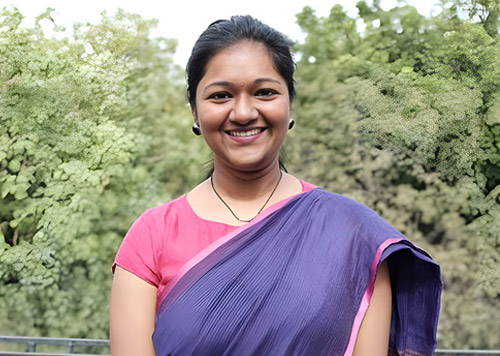
Garima Garg,
Max India Foundation
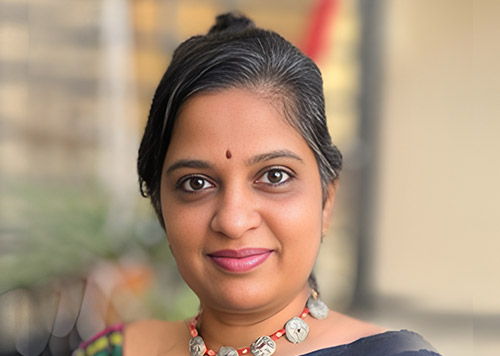
Trupti Mulajkar,
IIT Bombay Development and Relations Foundation
Copyright © 2026 India Leaders For Social Sector