
How We Built Our Board
Why Institutional Strength Determines Social Impact at Scale
Mandar Kulkarni - Co-founder and CEO, THE labs
In Brief
- Look beyond the profile: The right board members are not just a skills match, but people aligned with the organisation’s vision and journey.
- Choose for distinct value: Each member brings different expertise, experience, networks and perspectives.
- Create space for honest challenge: Alignment does not mean agreement; strong boards question and challenge while sharing a common vision.
- Harness collective wisdom: Regular board conversations have transformed individual advice into a powerful source of collective learning and support.
‘I might be the right profile for your board, but am I the right person?’
When Nikunj Jhaveri asked me this in January 2024, THE labs was barely four months old. My cofounder Mayura and I had approached him as a potential tech entrepreneur on our board, armed with a set of personas we worked out for our board.
His question made me pause. I realised that building a board was not just about finding people who matched a profile. It was about finding people who were compatible with the organisation, aligned with its vision and willing to invest in its journey.
This is the story of how the seven people who now serve on THE labs board came together and, perhaps more importantly, why they did.
While attending The ILSS Board Governance Program (BGP), I had identified the roles I wanted the board to play: holding us to a high bar for rigour and impact, bringing knowledge and experience, helping us strategise and mobilise resources, and pushing my boundaries. But I had also learnt an important lesson: build relationships before building boards.
Some relationships had existed long before THE labs. Nilesh Nimkar, founder-director of Quality Education Support Trust (QUEST), was someone I had known and worked closely with for over a decade. I had learnt from his work what rigour looked like in practice, so I knew he would bring both high standards and pedagogical expertise to our programs.
Ashwath Bharath, Senior Director at Teach For India, came through another chapter of my journey. He had mentored me during my time at The Circle Incubation and helped me navigate early conversations with prospective board members. When I realised he himself would make a great board member for us, I hesitantly proposed the same to him. His response shaped more than his own role. He agreed, with one condition: I should tell him without hesitation once he stopped adding value to the board, and he would be happy to step down. It gave me the confidence to build a culture in which we could have honest conversations about the value each person was bringing, including when that value might have run its course.
Two more board members came into my orbit through ILSS, though in very different ways.
Rita Nag Chowdhury and I were formally connected through the BGP placement process, but the relationship quickly went beyond that. She travelled to the field, attended events where I spoke and hosted me at her home. The time she invested helped her understand our work and allowed me to understand her philosophy.
Shantanu Ghosh came through a 40-minute mentoring call during The ILSS Fundraising Program. He was one of the few people who immediately understood our approach to teaching AI through both a technical and social lens. We connected from that very first conversation, and he generously told me I could reach out whenever I wanted to discuss something. After a few more conversations online, I knew I wanted him on our advisory board.
Our first crowdfunding campaign in January 2024 brought two more people into the fold. A mutual friend introduced me to Jayanti Phadke, then heading Asia HR at TOLL. She supported us through TOLL’s CSR program, opened doors to others for us and has remained a consistent champion of our work. Neelima Thota, then Asia Head of WASH at BMGF, was already an acquaintance who became interested after seeing the campaign. She has since guided me on international grants and pushed me towards working with the government at scale.
And, eventually, Nikunj joined too, two years after that first conversation. Along with Neelima, he continues to challenge me to think about government partnerships and scale.
I reached out to the board members individually whenever I needed advice. But last year, I realised that their collective wisdom could be even more powerful, and we began meeting monthly. Those calls have become my biggest learning spaces. The board inspires me, supports me and challenges me. Their contributions are different, and bringing those differences into one conversation is what makes the discussions so valuable.
I have also learnt that alignment does not mean agreement. It means having people who care deeply about the same vision, even when they challenge how you get there.
Recently, I asked Nikunj what business discipline is genuinely useful for a social purpose organisation, and what corporate practice the social sector should never adopt. His answer was simple: the social sector should learn to leverage boards from the corporate world, but it needs to build empathetic boards.
I couldn’t agree more. I thought of our own seven board members, and how each has helped THE labs reach where it is today.
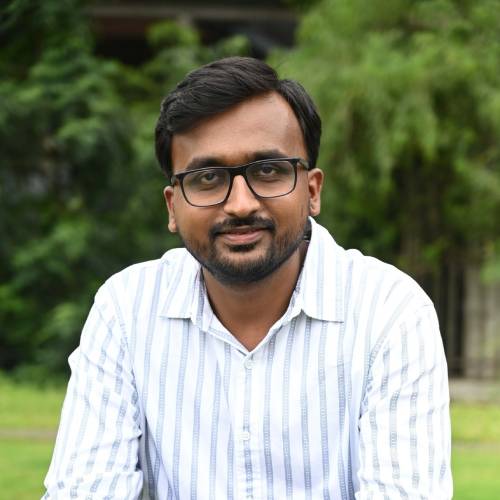
Mandar Kulkarni is the Co-founder and CEO of THE labs, a nonprofit which works with children at the intersection of technology, humanities and entrepreneurship. THE labs currently implements an AI Citizenship Program with 4000 children in grades 6 to 8, across urban, rural and tribal schools, and a residential fellowship program with 10 fellows from across Maharashtra. They also have a Centre of Excellence in Pune.
Mandar is a serial entrepreneur. Before starting THE labs, he had been working in rural, tribal and urban educational fields for over a decade towards meaningful and ethical interventions of technology, through Gatuvit, his tech-based social enterprise. Through Driya Creatives, a film company he co-founded 6 years ago, he has been a part of producing a few short films and documentaries.
Copyright © 2026 India Leaders For Social Sector