
ILSS TIPS
Building an Alumni Movement
Five Lessons From the Year
Aditi Bharagava, Manager, ILSS, | Archana Ramachandran, COO, ILSS | Meghna Jaishankar, Lead, ILSS
At India Leaders for Social Sector, we often find ourselves returning to a simple reminder. An alumni network is not the same as an alumni community. And a community is not quite the same as a movement. A movement begins when people feel ownership.
Over the past year, as our alumni base has grown to more than 1,300 leaders across cities, we have been learning by doing. We hosted 68 events in 11 months, and nearly one in three alumni participated. Many returned more than once, for learning sessions, informal meetups, and conversations with peers navigating similar challenges.
A small but important factor in this journey has been that the Alumni team is made up of two of our alumni. Their shared experience helped build trust more quickly from a place of familiarity and empathy. The most important learning has been about people: what helps them feel connected enough to show up, stay engaged, and take responsibility for the community. One of the quiet strengths this year has been the role of the Alumni Council. Having alumni representing different centres and cities has helped us stay grounded. Their feedback has often been candid, sometimes challenging, and always practical. It has reminded us that communitybuilding cannot be designed centrally. It has to be shaped with the people who are part of it.
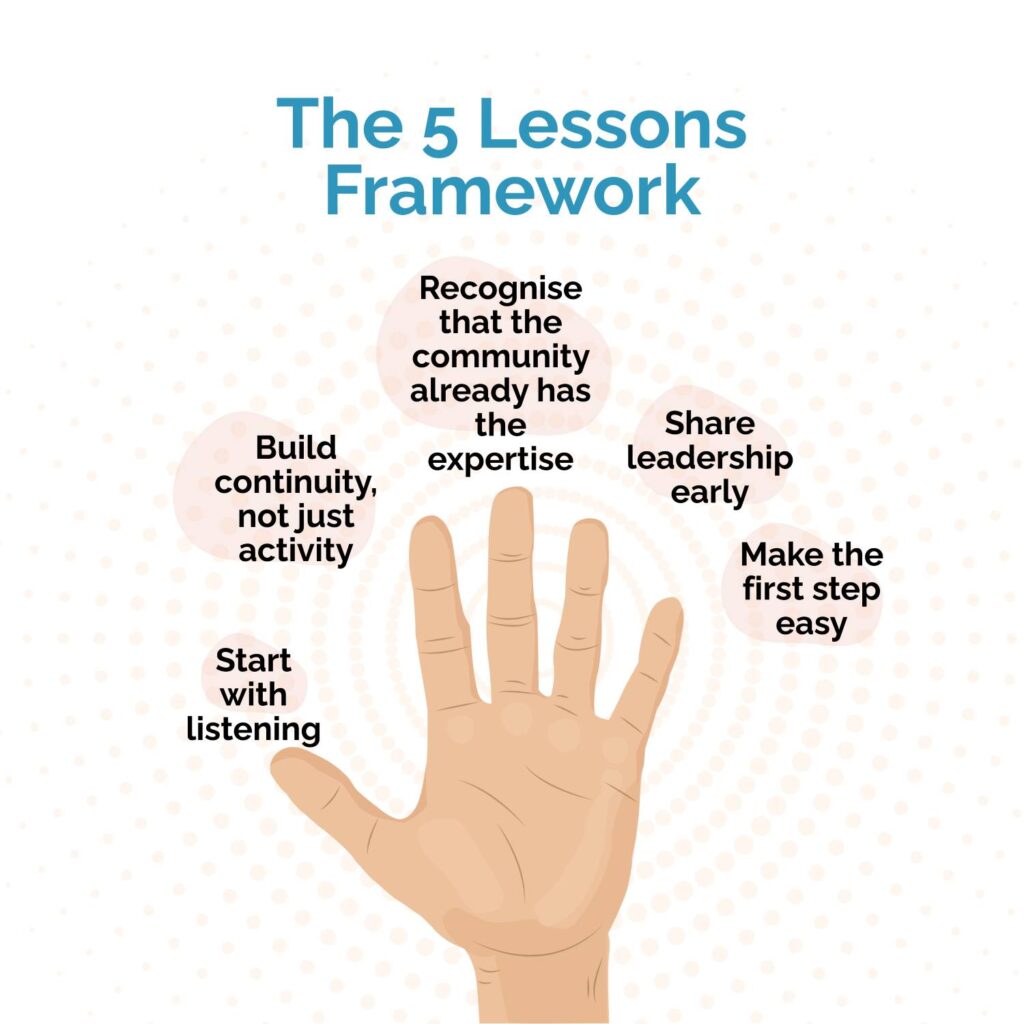
Here are five lessons that have stayed with us this year. They are drawn from real moments, conversations, and experiments across city chapters.
1. Start with listening
One of the most meaningful shifts we saw this year began in Chennai. When the chapter was revived, the instinct could easily have been to launch with a formal event. Instead, the newly onboarded Chapter Lead, Uma Narayanan, an alum of The ILSS Leadership Program (LP) & Program Director, TATA Consultancy Services, began with an informal meetup where alumni from the city had interesting conversations on what had worked in the past, and what would make it worth their time to engage again.
The alumni began suggesting ideas immediately, including visits to organisations, informal meetups, and opportunities to learn from one another. The chapter found its direction not through planning alone, but through listening. The conversations created momentum as people felt ownership, seeing how their ideas translated into action almost immediately.
To better understand what alumni were looking for, we ran simple polls across city WhatsApp groups, asking what kinds of engagements they would find meaningful: whether it was a heritage walk, a food meetup, a field visit, or simply an informal space to talk. While the alumni shared their preferences, we followed through.
2. Build continuity, not just activity
Another learning came from paying attention to what happened after events, not just during them. In several chapters, a pattern began to emerge. The gatherings that led to the strongest engagement were the ones where the next step was decided while alumni were still in the room. A discussion about leadership would naturally lead to a field visit. A field visit would lead to a follow-up conversation or a small group meeting.
During an informal meetup in Mumbai, The ILSS Fundraising Program (FR) alum & Founder, Apni Shala, Rohit Kumar, had a casual conversation with fellow alumni around Diversity, Equity and Inclusion that created so much interest that within the next 15 days, a dedicated session on DEI was organised and saw strong participation from the community.
A similar pattern emerged in the East and North East chapters. During city chapter calls, the leads spoke about a common challenge around fundraising. Instead of letting that remain an open concern, it became the starting point for a series of focused online sessions on fundraising. Vinita Saraf, an alum of The ILSS People Practices Program & Founder, EkTara and Anish Mukherjee (FR alum), Co-Founder-Director, AltEd, led the first session. Another session was led by Sataruppa Majumdar (FR alum), Chief Functionary, Swapnopuron Welfare Society and Amrita Ganguly (FR alum), Chief Diversity Officer and Internal Communications, Tata Motors Commercial Vehicles.
Vishal Dhale (LP alum), Strategic Philanthropic Partnerships, IITB-DRF, met Lalita Prakash (FR alum), Head – Fundraising & Strategic Partnerships, Jagriti Yatra at a Mumbai Alumni meet, which eventually led Vishal to sign up for the Jagriti Yatra.
Across cities, the pattern was similar. A need was voiced, picked up by the community, and translated into action within a short span of time. Organic meetings that followed these gatherings added to the continuity. Connections began to build through in-person interactions, often in ways that could not have been planned.
3. Recognise that the community already has the expertise
Some of the most energising moments this year came when the alumni stepped forward to share their own work. Field visits became one of the most powerful formats for this reason.
Some of the most engaging field visits include a visit to Hasiru Dala’s recovery facility in Bengaluru, V Excel Educational Trust and Vidya Vidhai in Chennai, Akshaya Patra Foundation in Mumbai, Swapnopuron Welfare Centre in the Sunderbans, and Udayan Care in Greater Noida. Each of these visits brought with it a different context, but a similar depth of engagement rooted in the realities of the work.
We saw a similar pattern in virtual spaces. A learning webinar with Ramesh Srinivasan, Senior Partner at McKinsey, on his book ‘The Journey of Leadership’ brought together several alumni from The ILSS Board Leadership Program who had not engaged with the community before. For many of them, that session became their first meaningful connection with the alumni network. It opened the door to further participation.
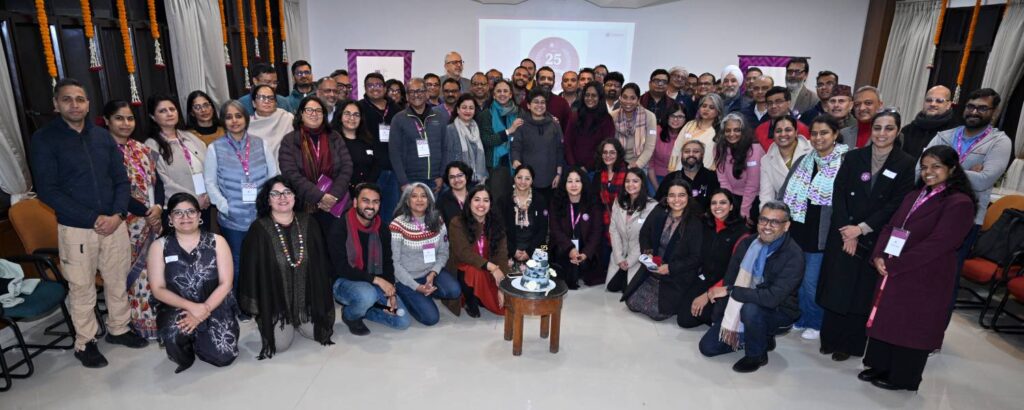
We were fortunate to host prolific speakers such as Ravishankar Iyer on storytelling, Krishna Kumar on AI, Dhir Jhingran on the evolution of the social sector, and Anita Agnihotri, who spoke about her writing. These sessions brought in both familiarity and fresh perspectives, often encouraging the alumni to engage with the community in new ways. In some sessions, it was the alumni themselves who became the experts. Kavita Gunderia and Urmila Sampath (LP alumni), Co-founders, Let’s Talk Money, led a session on what one should know about SPO governance, while B S Surya Prakash (FR alum), Program Director, DAKSH, led a discussion on ‘Law, Justice & Systemic Change’.
4. Share leadership early
One of the most encouraging developments this year has been the emergence of leadership from within the community. The City Leads structure has been central to this. Having alumni representatives in each city has made engagement more local and responsive. Chapter Leads understand the realities of their cities, the schedules people keep, and the issues that matter most to them.
We have also seen leadership emerge in quieter ways. The Alumni have volunteered to host meetings, coordinate visits, facilitate discussions, and reconnect with peers who had drifted away from the community.
We have also seen leadership emerge in quieter ways. The Alumni have volunteered to host meetings, coordinate visits, facilitate discussions, and reconnect with peers who had drifted away from the community.
The alumni often move naturally between the roles of organiser and peer. That dual identity has made it easier for others to step forward and take initiative.
The alumni often move naturally between the roles of organiser and peer. That dual identity has made it easier for others to step forward and take initiative. This has been evident in the increased participation of the ILSS Alumni in large events like the India Fundraising Conference (IFRC) and the India Women’s Leadership Conference (IWLC).
5. Make the first step easy
An insight from the year has been that the first engagement is often the hardest. Alma Connect, the platform for all alumni to connect, has been a helpful enabler as a CRM and a way to discover one another. We’ve also learned that community is built in rooms, on field visits, and in the sustained WhatsApp conversations that continue between events.
We noticed that many alumni had not attended any events. Yet once they joined one session, many returned. In fact, nearly half of those who attended at least one event came back for more, with a 46% repeat participation rate. It is a small but encouraging signal that once the first step is taken, the likelihood of continued engagement grows meaningfully.
This has, in turn, changed how we think about growth. Instead of focusing only on the number of events, we are paying closer attention to the nuance and quality of the first interaction.
Being a pan-India community has added another layer to this. As alumni move across cities, they are often able to tap into an existing network almost immediately. That continuity creates a quiet but important sense of belonging.
Similarly, when we share pan-India engagements, travelling alumni are always welcome to join events in any city. These small moments of continuity, across geographies and contexts, have helped the community feel more accessible and inclusive, regardless of where someone is based.
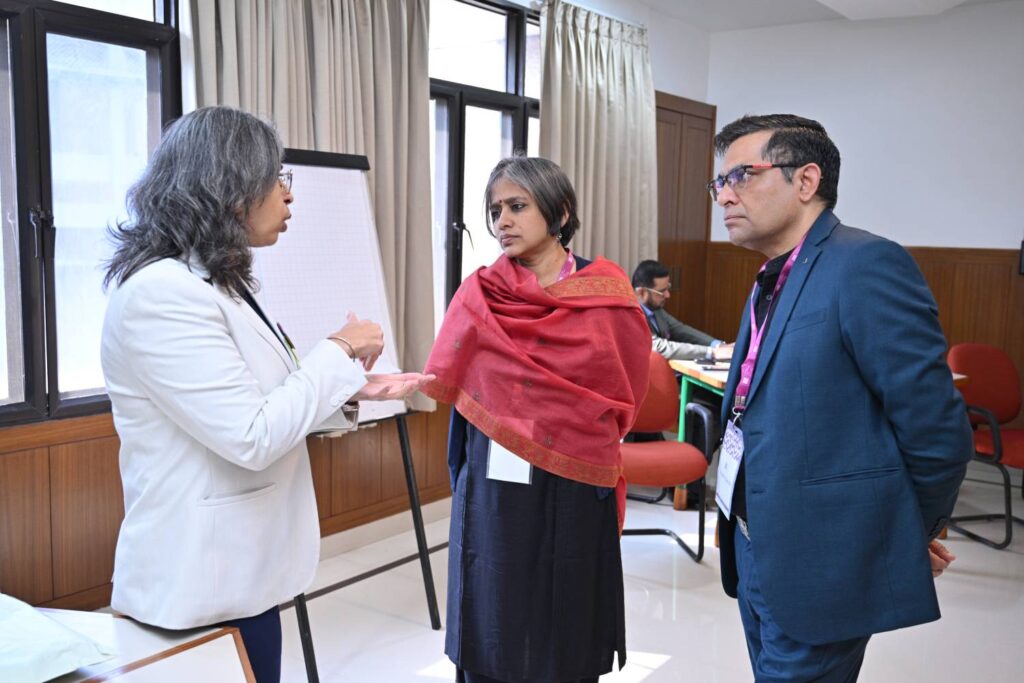
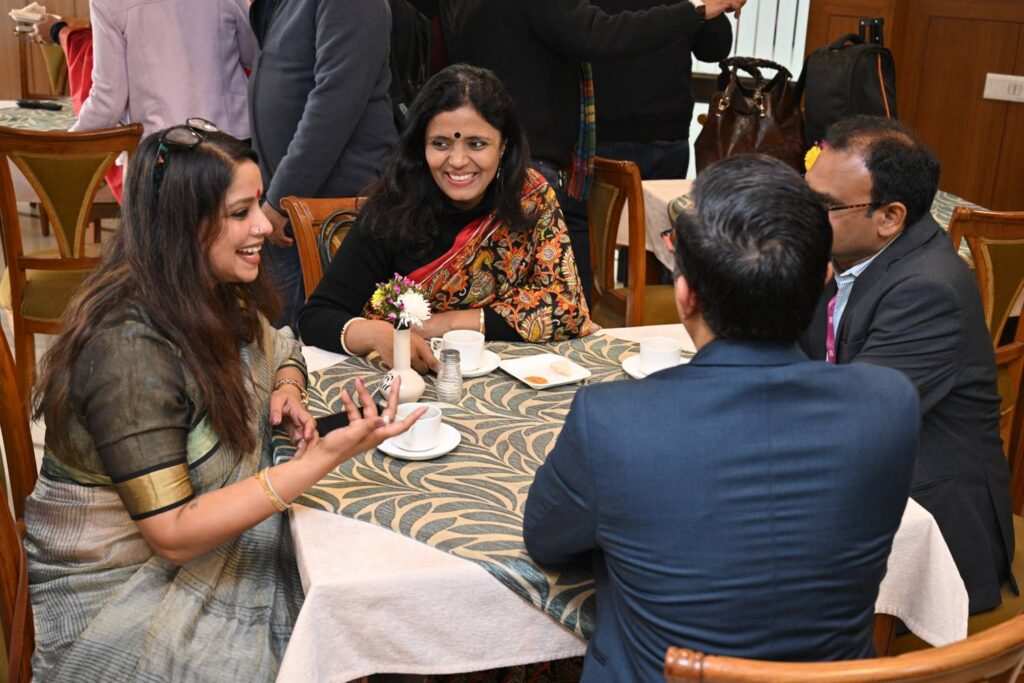
From network to movement
If there is one lesson we are carrying forward, it is that community-building takes patience. It grows through relationships, not schedules.
This year reminded us that movements are not created through programs alone. They grow when people feel responsible for the community and for one another.
Our role, as an organisation, is not to run everything.
It is to create the conditions in which others want to participate and lead.
When that happens, something begins to shift.
A network starts to feel like a community.
And a community begins to move on its own.
Copyright © 2026 India Leaders For Social Sector