January 2026 – Edition 05

Cataylsts of Change
Using Predictive Analytics to Accelerate Girls’ Enrolment
Educate Girls
As social programs scale, one challenge becomes increasingly pronounced: how to deploy limited resources where they will have the greatest impact. For organisations working in education, this challenge is especially acute, as out-of-school children are often concentrated in hard-to-reach geographies and shaped by multiple, overlapping vulnerabilities.
For Educate Girls, a nonprofit organisation founded in 2007, the mission has always been clear: to ensure that every girl in the most marginalised communities is enrolled in school, stays there, and learns effectively. However, as the organisation looked to scale its impact beyond its initial success, it realised that its traditional methods were reaching a point of diminishing returns. The solution lay not just in more boots on the ground, but in the intelligent application of data science.
Educate Girls went ahead with adopting predictive targeting powered by machine learning, transforming how it identified and reached out-of-school girls, significantly accelerating enrolment outcomes while optimising operational effort.

The Organisational Context
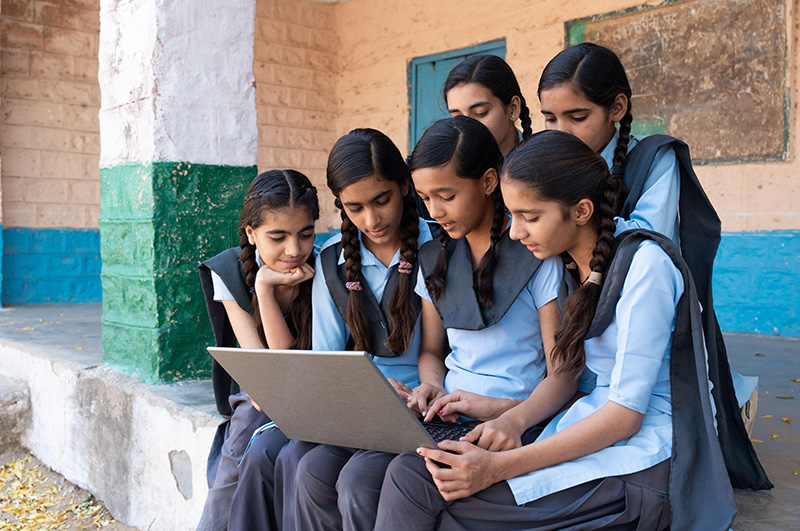
Educate Girls works in rural and educationally backward areas of Rajasthan, Madhya Pradesh, and Uttar Pradesh, focusing on enrolling out-of-school girls, retaining them in school, and improving learning outcomes. Its approach relies heavily on community mobilisation and collaboration with government systems, delivered at scale through large field teams.
In its early years, the organisation followed a saturation-based model. Field staff worked uniformly across all villages in a project area, ensuring coverage but not necessarily efficiency. As the organisation expanded, this approach became increasingly resource-intensive, prompting a critical question: could data be used to focus efforts where the need was greatest?
The Problem with Uniform Coverage
While saturation ensured no village was overlooked, it also meant that time and effort were spread evenly across locations with very different levels of need. Some villages had high concentrations of out-of-school girls, while others had relatively few. The absence of a prioritisation mechanism limited the speed at which enrolments could be achieved and constrained scalability. Recognising this, Educate Girls sought a more precise way to identify high-need areas without increasing operational complexity for field teams.
Building a Predictive Targeting Model
To address this challenge, Educate Girls partnered with IDinsight to develop a predictive targeting model using machine learning.
Educate Girls partnered with IDinsight to develop a predictive targeting model using machine learning.
The model developed using Python and the Random Forest algorithm, drew upon large-scale datasets, such as the Census of India, the District Information System for Education (DISE), and the Annual Status of Education Report (ASER) and others. The model could identify geographic clusters where girls were most likely to be out of school. Villages were then categorised into priority plans based on both the expected number of out-of-school girls and the feasibility of intervention. This allowed the organisation to rank villages and focus field efforts where impact potential was highest.
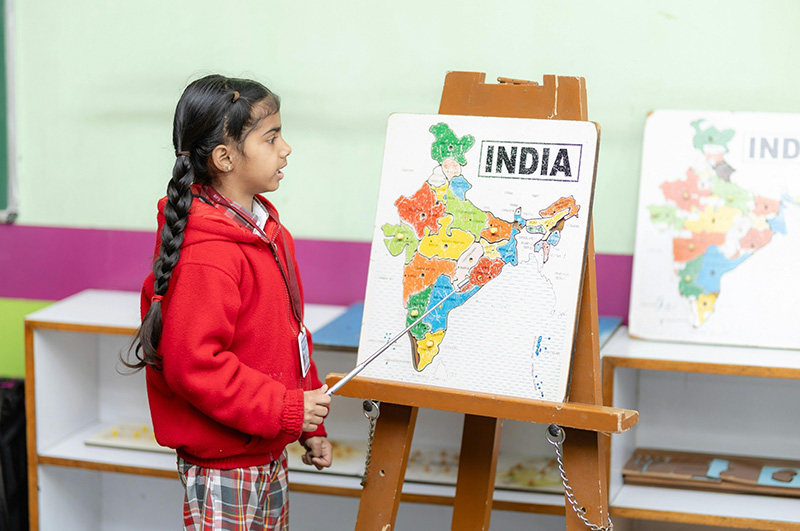
Crucially, the model was not deployed in isolation. Predictions were validated through field checks, refined iteratively, and simplified into actionable outputs that frontline teams could use with confidence.
Results That Changed the Trajectory
The shift to predictive targeting produced striking results. The model achieved close to 90% accuracy in identifying high-need villages, enabling Educate Girls to deploy its teams far more effectively.
The shift to predictive targeting produced striking results. The model achieved close to 90% accuracy in identifying high-need villages, enabling Educate Girls to deploy its teams far more effectively. Enrolment efficiency increased sevenfold, dramatically reducing the time and cost required to reach each out-of-school girl.
Over six years, the organisation enrolled approximately 1.56 million out-of-school girls. To put this in perspective, achieving this level of impact under the old saturation model would have taken an estimated 45 years. Importantly, these gains were realised without proportionately expanding the operational footprint, demonstrating the power of data-driven decision-making.
Democratising Data for the Frontline
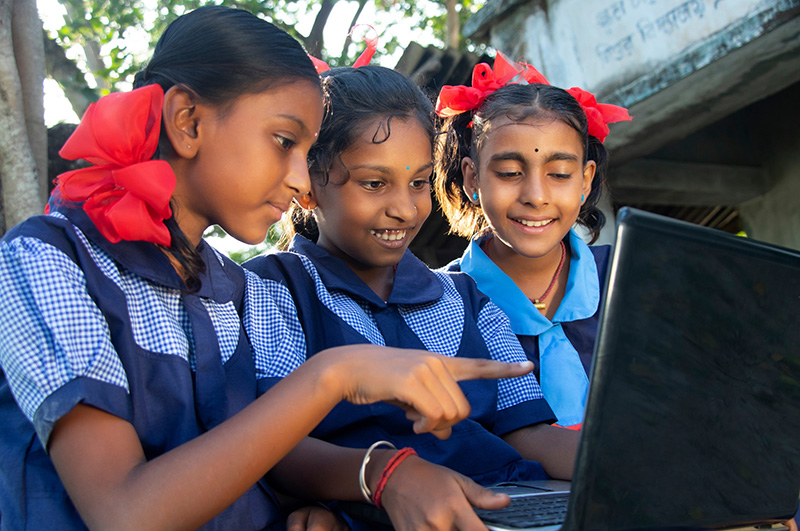
A critical component of this digital transformation was ensuring that sophisticated technology did not remain trapped in a central office. Educate Girls focused on democratising the data, translating complex algorithmic outputs into simple, actionable village lists for field staff. This allowed leadership to allocate resources with surgical precision. Field teams could now focus their intensive door-to-door surveys and community mobilisation efforts where they would yield the highest results. By simplifying the technology for non-technical users, the organisation ensured that data-driven decision-making became part of its cultural fabric.
Key Lessons from this Case
For social purpose organisation leaders, the case demonstrates that advanced analytics need not remain confined to research teams or pilots. When thoughtfully designed and operationalised, predictive models can directly inform frontline action and resource allocation.
Precision targeting can significantly outperform uniform coverage when resources are constrained. Machine learning models must be paired with field validation to ensure trust and usability.
In a landscape marked by growing interest in artificial intelligence and analytics, the Educate Girls case study offers a grounded, practical example of how predictive tools can accelerate social programs. Its reliance on public datasets makes the approach portable across states and adaptable for other organisations facing similar challenges.

Copyright © 2026 India Leaders For Social Sector