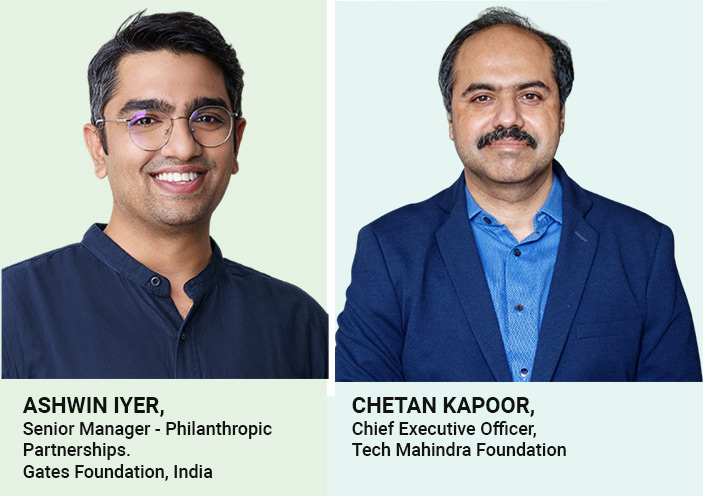
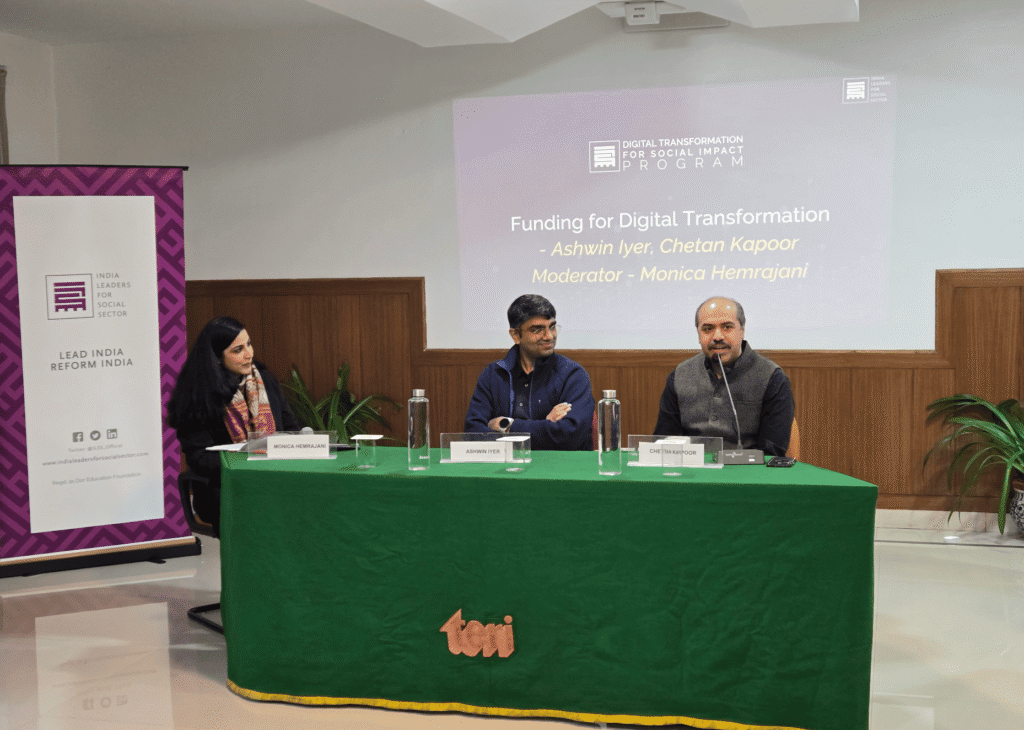
As nonprofits grapple with growing complexity, constrained resources, and rising expectations of impact, digital transformation has emerged as both an opportunity and a challenge. In this conversation, Chetan Kapoor of Tech Mahindra Foundation and Ashwin Iyer from the Gates Foundation reflect on what meaningful digitisation looks like in the social sector — beyond tools, platforms, or buzzwords. Drawing from decades of experience as a practitioner and a funder, they explore how data, mindset shifts, funder–nonprofit partnerships, and a focus on depth over scale can shape more resilient organisations and solutions. Together, they unpack when technology adds value, how innovation should evolve, and why collaboration, intent, and problem-first thinking are central to sustaining social impact in a rapidly changing world.
At Tech Mahindra Foundation, you have prioritised your workforce’s digital capabilities to enhance skills and employability, making digital a key pillar of your strategy. Can you explain its importance and how it supports your broader mission?
Chetan: Despite having ‘tech’ in our name, technology wasn’t always central to our work. When we started in 2006, we were very non-digital. Around 2012, we realised that scaling any program requires data-driven decisions. We implemented an MIS, initially just Google Sheets and then an online automated system. Now we have 10+ years of longitudinal data from our skill development program, enabling us to draw meaningful inferences about which courses have the greatest impact.
In fact, COVID clarified what tech can and can’t do. Since then, it has transformed how we approach scale.
How do you, as funders, determine what to support and what qualifies as fundable?
Chetan: Our approach has been to look at smaller organisations and build partnerships over several years as we look at nonprofits using the IAAP framework. Through that lens we look for:
Ashwin: For us, here are three ways we look at a nonprofit’s digital initiatives as we try to support them.
First, when they are going to embark on a digitisation journey, it should be something that lasts in the long term, not just for the project duration. So that way, there is enough flexibility in the indirect cost, assuming it’s at a reasonable price point.
The second is, especially for organisations with whom we have had a relationship over several years, a focus on building specific capabilities that the organisation genuinely needs. There too, I think what we look for has been clarity in the problem statement, and whether there’s enough homework being done to assess effort, cost, benefits, and alternatives. For example, choosing proportionate, sustainable solutions over expensive, off-the-shelf tools where that is prudent and realistic.
Also, we believe, digital investments are most fundable when they build enduring organisational capacity beyond a single project. Over time, strong funder–NGO relationships enable flexible funding for program indirects, general operating grants, or capability-building support.
Based on your experience, what factors make funder-nonprofit partnerships successful in digital transformation?
Ashwin: The effectiveness of community initiatives ultimately hinges on the actual work being done on the ground. If these efforts do not align with the communities’ needs or create meaningful impact, discussions about digital solutions or scaling efforts become secondary.
A significant barrier to digitisation is often the comfort level, or the lack of it, with technology among key stakeholders. For instance, some government officials responsible for digitisation rely on printed emails for feedback, not being comfortable with basic digital tools like Gmail. The general apprehension towards digital solutions is evident in discussions about readiness and the genuine intent to change and innovate, emphasising the importance of relationship-building.
Demonstrating comfort with digital tools is crucial. There are instances where individuals respond to any mention of ‘digital’ by insisting on bringing in a chief technology officer. This discrepancy raises questions about genuine commitment to digital transformation when basic comfort with technology is lacking.
Technology products can get irrelevant over time. How should innovation keep happening? How should funders support SPOs when the tech landscape is changing?
Ashwin: The product is often the hero of the conversation. But if you change the narrative to focus on the intervention you are supporting, that’s a stronger conversation. As foundations, whether CSRs, individual philanthropies, or family offices, we are all working toward certain impact goals. As long as you gravitate the conversation toward that, we are not worried about the pathway. Whether it is a stagnant platform requiring manual work or an evolving digital platform, as long as you continue moving the needle on impact objectives, that is the right conversation. Let us say we are committed to reducing maternal and newborn mortality. If you have created a digital solution to bridge one of these issues, it is in our best interest to ensure you are supported beyond our funding cycles.
Craft the narrative around flexible funding to sustain and refine the solution. The donor side is evolving as well. Post-COVID, there is much more discourse around patient capital and investing in organisational capacities. I see the maturity in the funding community to have that conversation today. I won’t get granular about open source versus proprietary platforms or perpetual licensing. If you say you have developed something that will evolve and require a flexible pool, it is definitely worth discussing.
Chetan: If we evaluate an organisation’s innovation capability, we ask: where does thinking about innovation start? Does it start from the product you designed, or from the problem you are trying to solve? These are two different things.
Technology’s history is not just evolution; it is also obsolescence. If I am hung up on the product I created and want innovation just around that, I may be headed for obsolescence.
Technology’s history is not just evolution; it is also obsolescence. When we started with smartphones, Blackberry was everything. Nobody uses it now. When we started with sheets, we used Lotus Notes. Nobody uses that now. If I am hung up on the product I created and want innovation just around that, I may be headed for obsolescence. But if the solution is my end goal and I evolve my thinking around it, I have a long play.

To give another example, for the visually impaired, Braille has been the standard. About 5-6 years ago, the Annie Braille device was developed by Tinkerbell Labs. We are now bringing that to where we work. But with AI-based glasses and wearables, we are experimenting with Meta AI glasses, enabling people who are visually impaired to see or have things explained to them.
At the end of the day, the problem needs to be solved. Funders are dependent on people who can think on their feet and innovate. Funders may never reach the communities where organisations are working. It is a very symbiotic arrangement.

Sometimes funders are keen to fund only advanced technology or apps, even when simple ones might suffice. How do you approach these discussions about when and where to invest?
Ashwin: I completely agree. My personal philosophy is that technology adoption should be driven by a felt need, rather than donor-driven. It’s important for donors to approach the hype surrounding such technologies with a critical perspective, as there is a need to demystify the reality behind these trends.
If something can happen on Google Sheets or basic Excel, why should a donor want to spend money on something else? I get the appeal of an app. But beyond WhatsApp and maybe food delivery apps, there are hardly any other apps we use regularly.
In fact, there was a surge in app development 3-4 years ago because people wanted to build something proprietary. However, this enthusiasm has diminished significantly over the past couple of years. The realisation has set in that investing in an app that might only attract a thousand users for a couple of years, and then fade into obscurity, is not a sustainable strategy. Also, apps require continuous evolution, which funders may not want to support.
From a donor’s perspective, is there a bias for or against depth versus scale, especially when it comes to funding digital innovation?
Chetan: Even before talking about funders, let me tell you my personal bias: always depth before width. You have to scale deep before scaling wide.
It’s intuitive: before solving for the country, solve for the community. Before the community, you solve for the individual. It requires working at depth to understand and unravel issues. Sometimes the intensity needed to solve for the individual is so much that you can’t think of scale given the resources required.
This goes back to my early journey. We used ‘scalability and replicability’ in the same breath. But then I reflected on why it should be scalable and replicable, always at the same time?
You have to aim for replicability. When designing a solution, design it so that by adapting and contextualising, you can use it somewhere else.
You have to aim for replicability. When designing a solution, design it so that by adapting and contextualising, you can use it somewhere else. If you aim at replicability, allowing others to take it and replicate it elsewhere, you have achieved scale. There are now examples of organisations working with this approach that have managed to scale by collaborating with others, creating networks of their kind that take it to other places.
But at least in my understanding, depth has to come first before you go wide.
Ashwin: For me personally, depth is important. I would rather spend five years working with a hundred people than aspiring to reach a hundred million people over five years.
There’s a difference between scaling a solution and designing something that’s scalable. Let us say you are working with tribal communities. We would be keen to see a common minimum set of interventions or ideas that could find replicability elsewhere. It’s hard for an institutional funder to support work which is a ‘segment of one’. Every individual is unique, and it’s difficult to support that institutionally.
The main challenge is to use design principles learned from a deep understanding of local situations, often revealed after two years into a program. As a private foundation, while we want to expand our reach, this goal must be based on a thorough understanding of community needs.
What opportunities do you see for collaboratives between the government and private organisations in the next decade, to build and/or democratise shared digital platforms?
Chetan: I am quite hopeful about collaboratives. It is fundamental to build collaborative DNA. The largest foundations realise it cannot just be about brandishing your logo. It has to be about solving challenges. Many solutions would emerge if you look through a collaborative lens — more open to learning, sharing, and coming together.
We are just beginning to scratch the surface. There are so many possibilities with shared resources. I see a need for shared services. Like in the IT sector, it is possible here too. I have seen smaller organisations scramble to enable functions like HR, finance, and communication. You can have a solution provider serving multiple organisations.
Similarly with data. Looking at data or evidence in a fragmented manner does not serve a purpose. If you are willing to share data and create a story much larger than what we can do individually, you could move the needle on policy. Otherwise, not every organisation can aim for policy and advocacy.

Ashwin Iyer, Senior Manager - Philanthropic Partnerships at the Gates Foundation, leads partnership efforts across Asia and the Middle East, helping mobilise philanthropic capital, forge collaborations with like-minded foundations, family offices, and nonprofit partners, and shape innovative approaches to support global health, development, and social impact. He has also played strategy roles at the Gates Foundation, leading program portfolios in health systems strengthening and health service delivery. He has also supported projects in the Gates Foundation’s Africa offices.

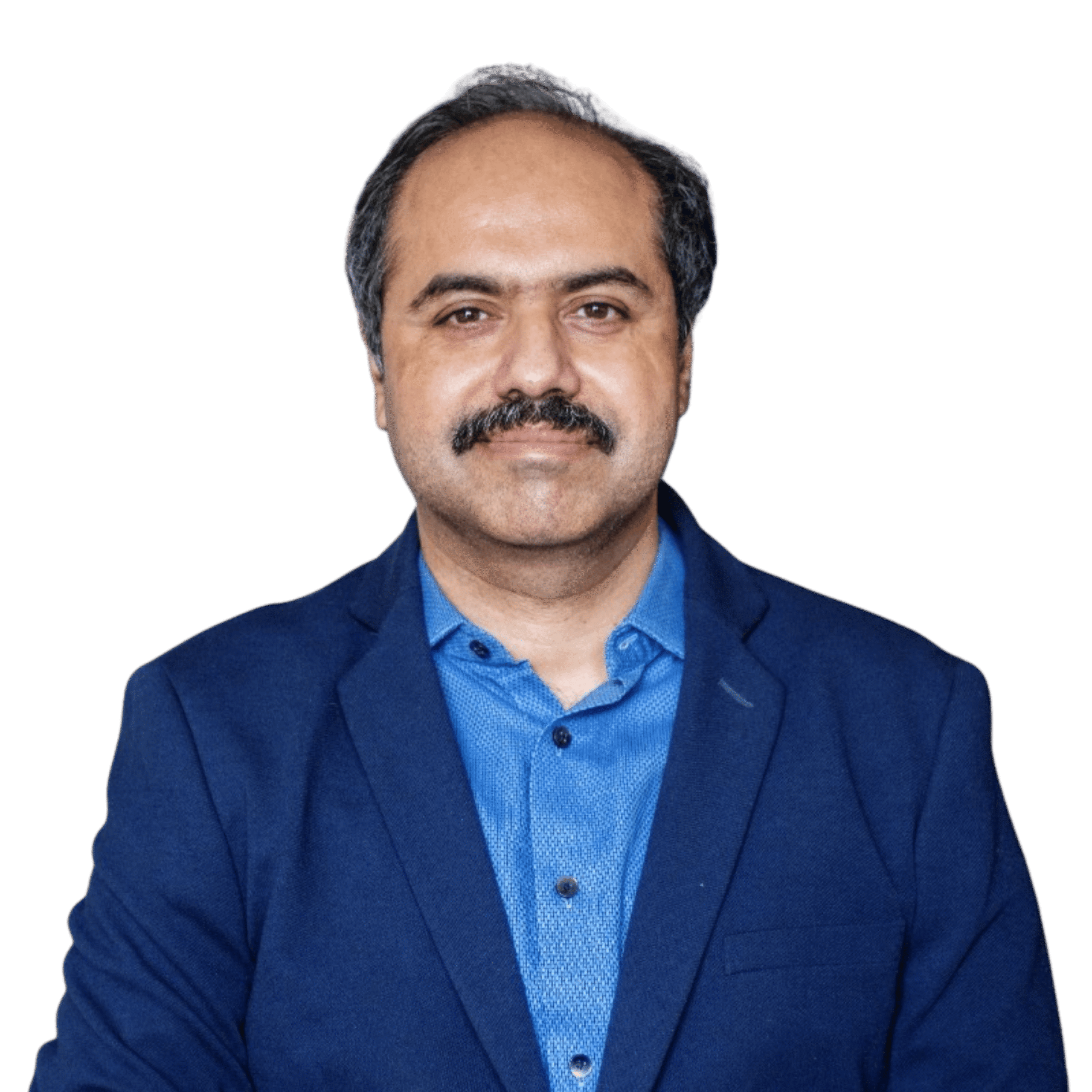
Chetan Kapoor, Chief Executive Officer, Tech Mahindra Foundation (TMF), has been instrumental in shaping the Foundation's flagship SMART program - one of India's largest urban skill development initiatives. A strong advocate for scaling deep before scaling wide, Chetan brings a collaborative approach to solving complex social challenges. A seasoned development sector leader with over two decades of experience across rural and urban India, he led Edulever and held leadership roles at Pratham, Bharti Foundation, and AIF in the past. He also co-founded Agrasar, focused on skills and education. Chetan has contributed to national education and skilling agendas, including through FICCI and the Delhi Government's Curriculum Reform Committee.
Copyright © 2026 India Leaders For Social Sector